"What a refreshingly honest blog about listening to music through hi-fi. So happy to see views based upon the enjoyment of music rather than so-called sound 'quality'." - Peter Comeau, Director of Acoustic Design at Mission / Wharfedale
Showing posts with label Audioquest. Show all posts

Sunday, 16 May 2021

It's In The Bag - Semi Portable Music System

Strangely, although I've been using this system for probably 6 or 7 years, I've never written about it here.

When away for 1 night and travelling light, I use a FiiO X3 and a pair of Beyer Dynamic IEMs. Sometimes I'll add the Chord Mojo DAC to improve the sound.  If its a couple of nights or more and I'm on the train or flying I'll add Audioquest Nighthawk headphones for a particular good sounding travel system.

But if I have the car and I'm away for a couple of nights or more then I'll take the semi portable system.

When I first set this up I had a Trends TA10.1 T-Amp to boost the sound from the FiiO X3, which still features as the source.  Later the Trends was replaced by the amazingly versatile Project MaiA DAC / integrated amp.  The Trends was a little more dynamic, but the MaiA is a little more refined and suits the use case better, particularly as it has a weightier bass and less strident top end - perfect to complement a very small pair of speakers. I managed to pick up the MaiA in a sale for £225, a considerable saving on its usual £380-400 price mark.  Its quite a solid bit of kit, so adds weight over and above the Trends, but that was a very simple device with only analogue inputs.

The MaiA allows connection of any standard analogue component using RCA phono sockets - the FiiO DAP, a phone, a TV or whatever.  It also allows a digital source to be connected to its internal DAC by coaxial, optical or USB cable plus I use it to connect my phone over Bluetooth for Tidal or Internet radio listening, particularly late at night so I can control music and volume from the bed - too lazy to get out of bed to switch it off! Carry a 3.5mm to dual phono cable and some hotel rooms will allow connection to the room TV too. A feature that I don't use but that adds to the value is a moving magnet turntable input! Other cables are very standard 42 strand speaker cables fitted with 4mm banana plus, a USB charger and cable and a USB cable in case I want to set up the laptop for some TV catch up or YouTube videos.

Is the FiiO DAC and analogue output superior to using the DAC in the MaiA? I would say that they are on a par, but different.  The MaiA is a little clearer but lacking solidity, the FiiO a bit better with timing and rythmn. Horses for courses.  For sure, adding the Chord Mojo between the FiiO and the MaiA is the best result, but that's more to carry and more time to cable up.  Talking of which, it takes about 5 minutes to set up and about 10 minutes to tear down and pack into the carry bag. Ideal.

Speakers are a pair of Tangent EVO.  I don't know much about the brand but they were about £80 from Richer Sounds around 2010, probably no longer available.

Complete system, a great size for many hotel room desks

The multi-input MaiA amplifier. The Tangent EVOs are fitted with soft foam feet to reduce transmission of energy into the surface - typically a hotel desk.


A UK pound coin gives you a good idea of just how compact this system is

The final component of the system is perhaps its most important attribute.  OK, its a very large camera bag, but the whole thing slots perfectly into a padded Lowepro so it can be slung over a shoulder and carried out to the car very easily.


What about how it sounds?  Well, its not a miracle from that point of view, but keep your expectations within reason and its very capable.  Bass goes a little deeper than you might expect and the system goes far louder than I ever need whilst not annoying other guests. There is no doubt the Chord Mojo /  Audioquest Nighthawk is a far superior listen, but the freedom to move around the room and lie in bed without the restrictions of headphones compensates nicely.

Monday, 10 February 2020

Belfast Show - March 2020


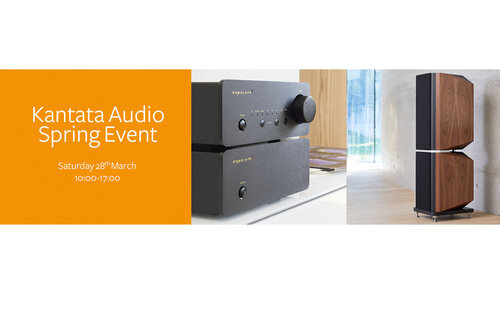
Last year upcoming audio dealer Kantata Audio had their first foray into delivering a hifi show, a useful addition to the Northern Ireland scene.  Based in the Crowne Plaza in Belfast, it seems to have been well recieved, see the review below:

http://www.adventuresinhifiaudio.com/09/10/2019/kantata-audio-autumn-event-show-report-28th-september-2019/

On March 28th March 2020 Kantata are following up the 2019 successiwth a bigger show and wider range of exhibiting brands. Audioquest, Auralic, Lejonklou, Hegel and Amphion will be represented amongst others.  Perhaps the main draw will be Kudos speakers being driven by an active Exposure set up.

More details here: https://www.kantata-audio.co.uk/events/spring-event-2020


Friday, 24 August 2018

Amps, Ireland, Sweden and a Dealer Visit

A recent trip over to Ireland and then Northern Ireland gave an opportunity to catch up with a couple of acquaintances - one a local and one a Swedish import.

The local I've known for a while, but its only recently that John has moved from audio enthusiast to audio dealer when he took the opportunity to make a career change over a year ago.  I've probably known the Swede for a little longer, but not in the current guise as audio manufacturer Lejonklou (say Lay-on-cloo) has made a myriad of changes and additions to its amplifier portfolio since I last had a listen back in August 2015.  John's business has evolved quickly and from starting as a great source of used quality hifi (predominantly Linn) to a mix of used and new equipment.  The roster of manufacturers is still developing, but Innuos, Lejonklou, Kudos and Audioquest are the mainstay for now, with more work to do on adding more options in the coming months.  John seems to be working quite hard at identifying good quality equipment that might not be available elsewhere in NI / Ireland.

So let's start by getting settled into the listening seat at John's Kantata Audio base camp.  2 rooms are available and they're very much typical UK domestic settings and sizes.  We started in the larger room and with the larger / more expensive system.  Here's the starting line up:

Cup of tea
Audioquest Niagara 1000 mains conditioner with standard cables and a Masterplug 4 way extension leading out of the single high current socket for the 2 power amps
QNAP TS-453 Pro NAS
Generic Ethernet Cable
Linn Klimax Exakt DSM
Audioquest Diamond 0.75m Ethernet Cable for Exaktlink 
Linn Klimax Exaktbox/1 (Katalyst)
1x Lejonklou Tundra v2.2 Tarandus Stereo Power Amp (treble)
1x Lejonklou Tundra v2.5 Stereo Power Amp (mid-bass) - this is the latest iteration of this amp
Audioquest Castle Rock 6m Speaker Cables
Kudos Titan 707 Speakers

The Titans are aligned along the longest wall of a medium size room which is furnished very much as a typical living room / lounge with a suite, carpets, cabinets etc.  Reassuringly normal, really.  We tried a couple of tunes but I felt that the lower end boom caused by the room was too distracting - deliberately, Linn's SPACE optimisation was not in use tonight.  I did find that shuffling the listening chair forward by a couple of feet improved the situation significantly, moving it another couple of feet forward put it into a bass null in the room and was therefore too much.  Initially it was difficult to understand how the system was delivering bass notes due to the room effects, but once the seat was in a better place it was easier to hear what was happening. So then we settled into some more listening.  Tracks varied from Dire Straits' "Six Bladed Knife" to Malia & Boris Blank's "Magnetic Lies" via Shelby Lynne and Daft Punk.


Here's what struck me about this system - its a sense of effortlessness in terms of the listening experience - its easy to relax into the tune, into the meaning of the musical message and enjoy the experience.  I've heard many iterations of Linn's Klimax Exakt with Katalyst and sometimes the level of detail available almost overwhelms the musical message.  Not so here, the detail was there, but it served the musical message, it wasn't the message in itsself.  Nice.  There's also a natural element to the vocals that I know is a particular forte of the T-707 and one I particularly enjoy, but its better still than I've heard through these speakers before.  
I'm still not fully convinced about articulation in the bass which I think could be tighter and easier to follow, but its something that more time with set up might help to dial out, and I think SPACE could remove it completely.  But not tonight.  I wonder about how this would compare to Linn's own amplification so John's off to find a Linn Akurate 4200/1 power amp - a four channel amp that's in the same pricing ballpark as 2x Tundras.  The amp was cold, but it was very interesting to be able to hear the amps I use at home swapped out directly with the Tundras.  1 thing struck me immediately with this change, the other 2 main differences took 2 or 3 tracks to become clear and understood.  The immediate difference was a taughter "punch" to the sound, particularly noticeable with percussion.  This may seem to be a good thing, but after gradually getting used to the other 2 aspects, its really all about the balance of compromises (as usual in life!).  What took a little longer to notice was the loss of naturalness in the music, in vocals in particular and when coupled with what I would describe as a loss of "sense" in the music - lead guitars, piano in particular - it would be too extreme to say that these aspects became chaotic (they didn't) but they were definitely less organised, the instrumental lines were not playing as well together as they do on the Tundras.  It was harder to keep up with the message in the music.  Hmmm.
But then we changed back to the Tundras and, as is often the case when making these sorts of comparisons, what you've lost is easier to hear when it all comes back again.  So the changes described above, that took a little while, were immediately noticeable on the swap back.  I'm intrigued, and would like to hear this change in my own system.

We chat for a good while about the industry, about dealerships, about the buying experience, seasonal fluctuation in the market, what sells well and why (and why not of course) and how John is going about finding new manufacturers to add to the portfolio.  Very geeky :)

Then on to room 2 - a smaller room, more like a home-office-with-a-sofa kind of set up, but could be a small lounge room.  Entirely appropriate to a number of UK home set ups I would think.  Here we have the following:

QNAP TS-453 Pro NAS
Generic Ethernet Cable
Linn Akurate DSM/2 (Katalyst)
Audioquest Water RCA to RCA Interconnect
Lejonklou Boazu Integrated Amp
Audioquest Rocket 33 6m Speaker Cables
Kudos Super 20A Speakers
Power was delivered through a basic Masterplug extension lead with OEM power cables

Again, Linn's SPACE optimisation was deliberately left out of the equation this evening. I'm very familiar with the Kudos Super 20s, having heard them for many hours in a friend's system and had them in my own system when passive and again active with Linn Exakt.  So they're a known quantity.  Given that the Linn streamer in this system uses the same Akurate level Katalyst DACs as my own system, then this too was reasonably familiar (although not in Exakt guise here).  So that left the Lejonklou Boazu as the main unknown for me.  And the room of course.  A touch of boom again here, but not something very distracting and the smaller dimensions of the room meant shuffling of seating was a less practical option, so the furniture all stayed in the same place here.
Well this is quite some system, given its relative simplicity.  If you're after fireworks, slam etc., then look elsewhere.  If you want to enjoy your music then this is a pretty good place to start, although I would say that, despite the relative simplicity of this system, it still not exactly basement money, being around 15k GBP.  We used a number of the same tracks as in room 1 but added some Kiki Dee live into the mix, along with Kris Delmhorst.  Fluid, natural, great timing, a really enjoyable listen.
But John had another trick up his sleeve and the Boazu was quickly swapped out for the Sagatun 1.4 stereo pre-amp and the Tundra 2.5 stereo power amp, the latter imported from the larger room. The interconnects are now Audioquest Water between the DSM and the Sagatun and a pair of Audioquest Yukon RCA to RCA interconnects between the Sagatun and the Tundra.  So given Lejonklou's pursuit of the musical and emotional message in the music, I'm not sure that my initial thoughts on this change will be welcomed, but the separates did bring some good "technical" improvements to the presentation - instrument separation, a sense of the acoustics of the recording environment, greater image stability were all there.  But this paled in comparison to the biggest change here - the emotion in the music.  Kiki Dee's "Don't Go Breaking My Heart" is a live recording on the "Almost Naked" album and is something of a favourite of mine - I listen to it quite often, and we used it here as the A-B comparison track.  In comparison to the very "pop" and somewhat jovial original recording of the song with Elton John, Dee's live version is downtempo and in a much more serious place.  It actually has some meaning, but through the Sagatun / Tundra pairing, the meaning in Dee's vocals was so clear, so much more sincere, and quite stunning.  The little Boazu is very good indeed, but the separates are that much better again.  Sometimes I find the Super 20As a little too forward - too in-your-face, but not here tonight, even with the hard wooden floor in this room.

So there's definitely more to test here, and I'm hoping to hear more in my own system in the not too distant future.  I have to say thanks very much to John for his warm welcome, excellent demonstration session and his ability to listen to my thoughts and not force his own views on to me, my pet hate with some dealers and manufacturer's reps.  He has the solid beginnings of an interesting business in a very good, domestically realistic, setting and his place definitely deserves a visit.

Saturday, 24 February 2018

LINN, KUDOS & AUDIOQUEST AT THE BRISTOL SHOW 2018 - SOUND OF THE SHOW

AUDIOQUEST / LINN / KUDOS
- Linn Akurate Exakt DSM Streamer / Pre-Amp
- Linn Akurate Exaktbox 10 DAC/DSP
- Linn Akurate 4200/1 4 Channel Power Amp
- Audioquest Cables
- Kudos Titan 606 Floorstanding Speakers


Well at last, a chance to hear the T-606 Kudos with Linn Exakt technology.  Not yet launched publically, the Exakt filters for T-606 are on their way. The main purpose of this room was to demonstrate Audioquest power cables.  The demo went from all stock power leads from a typcial high street Belkin distribution block and then gradually replace bits with Audioquest products.  First the standard Linn mains leads were replaced with AQ's starter product, the £160 NRG2 (soon to be replaced by Monsoon) - one for each of the 3 Linn components, but still plugged into the Belkin power strip.  A nice improvement in dynamics and clarity.  Then these were connected into the AQ Niagara 1000 power distribution block. This has a number of lightly filtered sockets and one unfiltered socket into which the power amplificer was connected.  Most of the design of this block is around care an attention to earthing and making sure that the earth has a lower impedence at the wall socket than it does at the component end - said to ensure that high frequency noise flows down the earth away from the system.  Another improvement here with similar quality and magnitude to the first change.  Then everything was swapped back to the standard leads and power strip and the sound became less clear and the imaging shrank significantly.  A clear change, but not as big a change as some other cable demos.  Worthwhile though, but as ever, VFM is a personal perspective.  What about the system itsself?  Well, those T-606s continue to shine - but with Linn Exakt are a step above what I've heard from them so far with standard Naim amps and their internal passive crossovers.  What Exakt brings to them is a real sense of purpose - a purpose to deliver the music in the cleanest and most convincing way.  There's lots of good technical attributes to talk about - the outstandingly deep bass from a reasonably compact enclosure, stunningly pin-point and ultra stable imaging being good examples - but its the way you just get wrapped up in the music and the message from the artist.  I go back a couple more times to this room, spending about 45 minutes in there later in the day, enjoying each visit. I later learn that the team hadn't had the time to set up SPACE optimisation for this room, so there's potentially more to come from this system.  Deeply impressive.

Monday, 27 June 2016

Dealer Visit: Hifi Lounge, Bedford. Chord Mojo DAC Review


This review is as a result of a visit to this dealer to pick up a demo pair of PMC speakers and is therefore written as a customer, not as a reviewer as such.  Hifi Lounge were not aware that I would be writing about the visit (in fact, neither did I at the time, it occurred to me later that it might be something worth writing about).  

Are the days of the high street hifi specialist numbered?  House of Linn is a large Victorian end terrace house in a residential area of a town just outside the M60 Manchester orbital, Cymbiosis are in converted farm buildings and there are many other examples.  As hifi polarises into mass market convenience and high priced specialist products, with those companies and dealers in the mid-range probably feeling increasingly squeezed, there is no need for the higher end dealers to remain in the high street.  “Passing traffic” is no longer likely to just drop in, rents are very high, customers want somewhere easy and convenient to park, and most auditioning is based on pre-arranged appointments.  Buying quality hifi is now more likely to be a long decision process that’s best done in comfortable, more home-like surroundings in a quiet location with none of the distractions and hassles of a town centre.
Which brings me to Hifi Lounge, based just outside Bedford.  The approach is along a gently winding country road and a smooth gravel drive that feeds a number of “units”.  But these are not units of the industrial variety, but converted brick-built former farm buildings.  The car park is surrounded by trees, well-kept grass and hedges.  As soon as I arrived I felt relaxed and I hadn’t even got through the door.  Hifi Lounge is identified by a discrete logo on one of the buildings and you enter through a lowish wooden door.  Paul greeted me with a friendly smile and handshake.  He’s an easy bloke to get on with, as is his partner Wendy and it feels more like going to visit some friends, or perhaps genial B&B hosts, rather than a retail environment.

On the left is the “office” area with desk and some stock.  This is also online central for web content and correspondence.  Straight ahead is the staircase and on the right is the smaller dem room and, importantly, the kitchen area.  A good mug of proper tea was soon in hand – appropriately in a PMC branded vessel.  This smaller dem room is arranged with kit along the longer wall and a sofa opposite, thankfully a good distance away from the wall behind the listener.  A good number of items of kit are lined up on racks and there are some pairs of speakers – one pair set up for listening, the others along the shorter end wall.  On the day of my visit there was much evidence of Naim, Rega, Bryston, Arcam and PMC in this room.  Whilst being the smaller room (I’m guessing its about 5m x 4m), it does represent a very realistic size for many homes and will therefore help a good number of customers get a decent impression of a realistic set up.  Décor is both modern (with wall art mural), casual and comfortable.  The ceiling is lowish, giving a cosy feel.  Nice.

When I was there, another customer was listening to some amp options in the, much larger, upstairs dem room.  This is slightly larger in floor area but also enjoys a high vaulted ceiling with exposed beams.  There’s a projector available and this room will better suit larger speakers, customers with larger rooms and, at a guess, those with larger wallets too.  I appreciated the 12” picture frames containing album sleeves – apparently these are changed from time to time and were recently all filled with Bowie albums as a mark of respect and appreciation.  I didn’t spend much time up here as there was a dem in progress and we didn’t want to disturb the other customer.  Back downstairs and Paul and I chat for a while about music choices, my current system, why PMC, what I was looking for in terms of a performance upgrade etc.  Paul comes across as genuinely interested, willing to discuss stuff he doesn’t sell and understand its merits and is clearly enthusiastic about the location and facilities he has to offer customers.

The PMC speakers are the demo units, so Paul brings the boxes and we pack them up together, still chatting about music and hifi.  Shortly afterwards the other customer comes down and joins in the chatter and it seems we have some work colleagues – current and past - in common.  I live in North Wales and have worked in Scottish, Yorkshire and London locations and here I am discussing colleagues with a stranger in Bedfordshire.  Small World and all that.

Given that I’ve never done any business with Hifi Lounge before, I felt very welcome and that Paul was interested in what I’m looking for.  On top of that, with a refundable deposit sorted, Hifi Lounge were happy for me to take their pair of Twenty.26 speakers away to North Wales and audition them for a week in my own system.  Doing anything other than this would’ve been pretty pointless really, using a different room and electronics from a completely different supplier (ie, in the shop) would not have provided much information really – certainly no benefit over my existing experience with the 26s at hifi shows and from magazine reviews.  Hifi Lounge were positively keen for me to ensure that I got a good long home audition before spending with them.  There was no quibble or doubt about trusting me with the speakers, even as a stranger – they clearly understand their customers’ needs and how to support those needs. This is a great way to engage a customer and gain their trust, as well as their long term repeat business.

Once the speakers were loaded up into the car, there was one more thing I wanted to try whilst I was there.  I’d taken my FiiO X3 portable hi-res FLAC player and my Audioquest Nighthawk headphones along as I wanted to give the new Chord Mojo DAC / headphone amp an audition, and knew that Hifi Lounge are Chord dealers.  So Wendy took me over to the headphone room, opened it up, set the lighting ambiance and let me get on with trying the kit.  But first, what about the room?  A very long, slim room, totally dedicated to the pursuit of high quality sound strapped to your head.  I’m guessing, but the room is probably around 8m long with all the kit arranged along one wall, with tall narrow windows down the opposite wall.  The kit wall has a waist high shelf with headphone amps from one end to the other – above this is an equally long row of high quality headphones on headphone stands.  All the well-reviewed kit is there – Audioquest, Grado, Oppo, Audez’e, STAX, Audio-Technica, Sennheiser, Shure, AKG, BeyerDynamic etc. etc.  What an array of choice!

I settled into one of the sumptuous leather wing backed chairs with the FiiO / Mojo / Nighthawk combo and lined up some tunes.  Wendy left me to it, just saying I should take my time and come back to the main shop when I was ready.  The first thing that struck me about the Mojo is how tiny it is.  Somehow, even after reading that it’s about the same size as a pack of cards, it still came as a surprise that it is, actually, the size of a pack of cards.  I suppose I’m just used to so much hyperbole in the press these days that I thought this was rhetoric for effect rather than reality.  So there it is, tiny.  But beautifully built – the satin black anodised aluminium casing feels solid and machined (as opposed to pressed) – it feels much more expensive than the list price would suggest.  The Mojo accepts normal USB and coax SP/DIF digital inputs, but also those from iPhones and Android – so great for being on the move. The controls are OK – you soon get used to what long press vs short press does and the action is solid and “well oiled” so to speak – the only downside being the rather bright colours which could be distracting in a darkened room.  But once the tunes start playing this rather pales (sorry!) into insignificance.  

I hooked up the FiiO using the coaxial digital output and set the Mojo to a sensible listening level – so not too loud.  Last time I heard a Chord DAC / headphone amp was when I bought the Nighthawks – it was the larger and more expensive Hugo and I wasn’t impressed.  The Hugo receives very good reviews but sounded artificial to me – certainly the same headphones being powered by the Audioquest Dragonfly and a Trilogy 931 amp was a much better experience – that combination working well together to provide a more natural, flowing and musical result.  So what of the Mojo?  Well it is most definitely a more enjoyable listen than either of those I tried earlier – there’s oodles of detail, but its refined not forced, it doesn’t sound like you’re listening to something digital, in that edgy, gritty excessive brightness that so many low budget digital products deliver.  This is classy.  There’s slam, deep bass and great timing - the music bounces along with energy but control.  This little box of tricks is a revelation.  At the price it’s an absolute steal.  I don’t have one yet, but once the main system has settled down I’ll be investing, and certainly before some long flights I’m expecting later in the year (and I’ll go back to Paul and Wendy to get mine).  If you’re as old as I am then you’ll understand what I mean when I say I think the Mojo is probably this generation’s equivalent to the NAD 3020 – everyone should have one that’s looking for top quality listening on a reasonable budget.  I’ve heard a lot of headphone amps in the last 12 months, this is easily the one to beat up to at least £1000.  Brilliant.

So Hifi Lounge – great location, great facilities and a warm welcome from Paul and Wendy.  I enjoyed my visit there, which is not normally something I can say about retail experiences.  They’re helpful, friendly, relaxed, clearly keen to let the customer spend time and make their own decisions, they run interesting events from time to time and offer great service, even to new arrivals.  Oh, and one of the best headphone choosing experiences anywhere.

Hifi Lounge have kindly reviewed this post for factual accuracy, but have had no influence on the opinions expressed.

Monday, 7 March 2011

DAC. Magic?

For those of you paying attention, the streaming set up currently looks like this:
QNAP NAS (including SqueezeServer software) - Etnernet over mains - Logitech Squeezebox Touch - QED Performance Digital Coax cable - Cambridge Audio DACMagic - Audioquest Emerald analogue interconnect - Meridian 541 pre-amp and then off into the active amps and Linn Keilidhs.

And very satisfying it is too - as I've said earlier, about 90% up there with the CD player, and definitely better with 24 bit tracks.  But there's always that nagging doubt eh?

Now some sites (e.g. Stereophile, Digital Audio Blog) have been making some seriously big claims for the capability of the Logitech Squeezebox Touch - such as "the best transport I've ever heard (Digital Audio Blog on the Touch with a Teddy PSU)".  This means they've been running the humble Touch with some multi $k DACs and stratospherically expensive amps and speakers.

I am, by nature, somewhat sceptical of such claims and what sometime seems to by hyperbole.  Now I'm not singling out Stereophile nor Digital Audio Blog or questioning their integrity, it just that I like to see lots of evidence and corroboration, or better still, find out for myself.

Another thing that's a worthwhile background to this post is my continuing good natured sibling "rivalry" with my brother when it comes to hifi and the route to getting the most enjoyable sound in the home.  Brother J has gone down a different route to myself, (although we initially shared an enjoyment of Meridian CD players, with J running a 206 for many years.  After a few years with Meridian CD / Cyrus 2 / PSX and Mission 770 Freedoms (the last of the 770 line) he's recently upgraded to a Cyrus 4 box CD player (I can't remember the transport model, but the other three boxes are DAC X and 2 PSX-Rs) plus a reasonably high end Cyrus integrated.  This has substantially improved his whole system and it suits his taste - its fast, has pin-point imaging and real clarity and separation.  But for me, it doesn't go deep enough, the music lacks somewhat in emotion and doesn't "envelope" the listener.  Its all silver too, which just isn't right ;-) Each to his own of course, and it delivers what he wants to hear.  This means he finds my system to be somewhat vague in its imaging (can't argue with that) and a little less analytical than he would enjoy.  Fair enough.  Will do a feature on the "other systems I have known" page sometime soon.

Why is this relevant?  Well, in amongst J's kit list you might have spotted a somewhat fine DAC combination of Cyrus DAC X and PSX-R.  This half term (this is a very late post, apologies!), J came to visit with family and had kindly agreed to bring along said DAC and power supply.  It's good to unplug and re-connect cables every now and then, make sure the connections are clean!  And so began a "quick trial" session - we reckoned an hour would be enough...

For purposes of this session, we used exclusively 16 bit 44.1 kHz FLAC files ripped from my CD collection - so we could make direct comparison with my Meridian 508.20 CD player.
Music used:

Thea Gilmore - Loft Music - Tracks "Ever Fallen In Love" and "The Old Laughing Lady" (A great covers album - with Thea its all about her extraordinary voice - its range and ability to convey emotions, plus the acoustic instruments and backing vocals)
Brendan Perry - Eye of the Hunter - Track "Death Will Be My Bride" (Don't listen if you're feeling a bit down!  Very well recorded and spacious track with some really tricky and complex cymbals to deal with)
Eagle Eye Cherry - Desireless - Track "Shooting Up In Vain" (Another one to cheer you up! Mutilayered instruments that need a good system to allow each instrument to survive in the complexity of the mix)
Chris Rea - The Road to Hell - Track "Looking for a Rainbow" (needs a system that has good drive and pace as the song builds the underlying rythmn throughout)
Eddi Reader - Eddi Reader - Track "Dear John" (lovely voice, needs to convey the emotions)
FAC 15 - On Fierce Angel's Angels Fall 3 CD Set "Stay With Me Till Dawn" (a superb re-work of the Judie Tzuke classic with a bass line that slides into the depths of the unknown!)

To get a reference and to demo the DACMagic to J we started off using the Thea Gilmore album to play the Touch with its internal DAC and then stepped up to the DACMagic.  J's view largely aligned with mine - a massive improvement somewhat out of kilter with this modestly priced most looking little black box.  Comparing to the CD player there are aspects of the music that are different but we couldn't really choose between Touch / DAC and the CD player.  CD being warmer, Touch being a bit more up-front.  Tried Eagle Eye and Chris Rea on this too, with similar indecision.

So the Cyrus DAC X is unpacked and plugged in to the system.  It sits on an Isoplat and takes the place of the DACMagic in support of the Touch for the streaming side of the system.  What follows is somewhat of a revelation.  Usually, when you get to this stage with hifi, the improvements in the system deminish, the more you spend on the system.  One day I'll post in depth on the benefits of going from passive amplification to active amplification with the Linn Keilidhs which was the biggest single improvement I've made in my system.  Until now.  For those of you who've had the benefit of listening to a Linn or Naim system that has been moved from passive to active, you'll know just how fundamental a change this Cyrus shoebox has brought to the system.

Cyrus DAC-X in brushed black


Some examples of what we heard:
- The music appears to be playing slower (but it takes the same length of time to play the track) this would seem to be because the instruments and/or notes aren't slurring into each other, they've got time and room to be notes in their own right
- One of the tracks (can't remember which one) has a riff played on an acoustic guitar.  As the track progresses and more joins the mix, the guitar continues in the background.  But we were both astonished to hear (and we both spotted this at exactly the same moment, without discussion) that part way through the track the guitar changes from acoustic to steel.
- The Brendan Perry track finishes with a very complex and subtle cymbal sequence.  Now, the difference between the sound of each cymbal is much more obvious, but on top of that, you can hear if the stick is striking the top or the edge of the cymbal and when being brushed, if the brushing is being done by a brush or by a stick.
- The soundstage on all tracks is outside the speakers and with the FAC15 track, fills out into the room.

So we were VERY impressed with this and messed about with a few tracks for another hour or so.  Then outcame the Cyrus PSX-R to sit alongside the DAC-X.  You need to keep both the DAC and the PSX-R plugged into the mains then there's an umbilical chord from the PSX-R to the DAC.  I understand that the internal power supply of the DAC is then dedicated to digital duties and the PSX-R takes over the analogue output circuits.

So what now?  Well this is another non-subtle improvement.  Darkness behind and around instruments, bass is deeper and more controlled (check the sliding synth bass line on the FAC15 track) and those Brendan Perry cymbals shimmer out and away from the speakers, seeming to sit in the room.  FAC15 are now enveloping the whole room.  Its lush, detailed and completely captivating.  And so the quick listening session went on for 3.5 hours.  We didn't want to stop trying different tracks.  Later in the evening, the system seemed to have matured again - I know many experience this with their systems and there is much debate about noise on the mains. physcological effects and many other theories. Perhaps this would've happened anyway, but we did suspect that the PSX-R might have warmed through a little?

We, rather indulgently, spent another couple of hours of listening the following day, throwing in some 24bit stuff from Linn and HDTracks, which, of course, was mighty impressive, if, at times, a little dry.  No problems with Ian Shaw's "Barangrill" (on "Drawn To All Things" from Linn Records) nor with Steely Dan's "Hey Nineteen" (on Gaucho from HDTracks).

And then J and his Cyrus kit went away again.  Sad.  But one thing has definitely been proven - the little Squeezebox Touch is certainly capable of supporting some very serious downstream electronics.  Now to eBay...

Friday, 25 February 2011

Squeezebox Touch - Evolution Begins

No changes to the rest of the system (although there is a bit relating to cables...) so this is the first stages of experimentation with streaming audio and how it relates to the Logitech Squeezebox Touch in my system.  For the first part of this story, see the posting First Streaming Times below.
So we are at a Touch on its own into the rest of the system using a pair of Linn Black analogue interconnects.  And it sounds very detailed but flat, lacking space between the instruments, there's little width to the sound and its all lacking somewhat in terms of drive / pace / enthusiasm.  Its fine for background listening, but not so good for listening to music properly.  The CD player is still in a different league.  These comparisons are done between the same CD and the ripped version in FLAC, not against high res files which would be an unfair comparison.
 
Some research revealled that quite a few folks have been running external DACs on their Squeezebox Duets and Touches with some success, and there are various references to different (e.g. Fidelity Audio, Teddy PS) external power supplies making a difference.
There's then a whole separate story about a chance opportunity to go to a Naim dealer when Naim themselves were there demoing loads of kit.  I might write that one up sometime.  But the key relevant point here is that Naim have come out with a streaming device that sounds distinctly unimpressive to me when using its internal DAC, but plug it into the Naim stand alone DAC and it sounds astonishingly good.  Add the external power supply to the external DAC and you have something quite remarkable, but also rather expensive (approx £6.5k at this point).  So this, coupled with the internet chattosphere spurred me on to further experimenting.
I took the plunge and bought a Cambridge Audio DACMagic (for those with an eye for absolute detail, its a black one) along with the CA basic optical digital interconnect.  This is a major step forward and unleashes all sorts of extra information, deeper bass and the soundstage leaps out from between the speakers and pretty much doubles in width.  Hmm, very interesting.  If I then move the interconnect from the CD player (its an AudioQuest Topaz) there are further improvements in control and bass extension.  I purchased a What HiFi recommended Chord Chameleon Silver Plus interconnect (£125) which is an improvement on the Linn, but isn't as good as the Topaz (£180 for 0.5m over 10 years ago, but thrown in when I bought the CD player).
Now if I use the DACMagic and CD player as a transport then the CD player inbuilt DAC still wins out, and that's using an optical digital interconnect (not tried with a coax interconnect yet), so the DACMagic doesn't appear to be as good as the DAC inside the CD player.  Or is it?
The reason for this doubt is because of the next step I took.  I picked up an old coax digital lead that's actually designed for Meridian components to talk to each other, but only for control purposes, so its not exactly designed with sound quality in mind.  However, the improvement of this over the optical digital lead was astonishing.  Optical appears to be rubbish - that could be the Touch output, the DACMagic input, or the cable, or some kind of combination of all or some of these. The biggest difference here is difficult to describe, but if you imagine the "space" around, between and behind instruments is blackness, then the blackness was much blacker - I guess it means there's some kind of digital error correction or hash (jitter?) disappearing from the signal? The music is now going along with some proper drive and pace.  Foot is tapping at last. So if a rubbish cable is better than an optical one, what's a decent cable like?

So in comes a fairly basic but recommended digital coax cable - a QED Performance which is only £30.  Another step forward over the basic coax, but more subtle this time - mainly in the treble area, it's lost some of the remaining grittiness and splash.  Must get around to trying the DACMagic with the CD player transport and the coax interconnect soon, just haven't had the time.
So we're now at Touch - QED coax - DACMagic - Chord Chameleon. 

Comparison with CD player is now getting about 85% of the way there.  CD player still giving a bit more in terms of punch / pace etc, but from a pure detail point of view, there's nothing in it.  CD player still using the Topaz interconnect though, which is somewhat better than the Chord Chameleon.
So off to ebay to find a secondhand Topaz (you can't buy them new anymore).  No luck there, but did find 2 pairs of Audioquest Emerald interconnects which were top of their range at around £230 for 0.5m.  Got them for £40 and £42 so one for the CD and one for the DACMagic.  So here we have yet another improvement to both Touch / DAC and the CD player.  Again its subtle but its definitely there.  How can I describe this one?  Well its a kind of smoothness and flow to the music - whilst the instruments are very seperate and obviously so, the actual music seems to flow along much better and its not a bunch of accurately rendered notes, its a better illusion of a piece of music (I almost used the word accurate there, but we know its not about accuracy, because so few of us actually know what the original performance sounded like and we need to remember that much of the processing done during production is deliberately trying to make the recording NOT sound like the original performance).  This description probably isn't making much sense, that's why I'm not Jimmy Michael Hughes!
So we have Touch - QED Coax - DACMagic - Audioquest Emerald and that's now somewhere between 90 and 95% of the way to the CD player's quality. 

But here are the 2 killer points.  It now stands me at £500 and if I was starting from scratch I'd a choice between that and the £1700 CD player, I know which I'd choose!  But as soon as you add in the ability to play 24 / 96 files then its a hands-down win for the streaming tech - its a good 10% better than the CD player and leads to those evenings that are "just one more track" until its suddenly 1am!

So you have to wonder just how much DAC the Touch can support...
And what about power supplies, and do they matter, once you're no longer using the internal DAC?
 
If you're interested in more on the Squeezebox Touch, take a look at this article as there are mods you can do to your Touch without spending any cash: