"What a refreshingly honest blog about listening to music through hi-fi. So happy to see views based upon the enjoyment of music rather than so-called sound 'quality'." - Peter Comeau, Director of Acoustic Design at Mission / Wharfedale
Showing posts with label Keilidh. Show all posts

Thursday, 8 January 2015

FRANKENKEILIDHS - Zombie Speakers Rise Up: PART 5

PART 1 here
PART 2 here
PART 3 here
PART 4 here

Driver installation time.

70W max it says on the back of the CRB-165PS drivers.  The spec says 35W RMS.  Enough to get a decent volume without being a PA system.  The chassis of these drivers is a perfect fit into the baffle cut-outs in the Keilidh.  Even the holes are drilled in a perfectly aligned arrangement to allow bolt to go straight into the existing threaded bushes embedded in the cabinets.

The chassis of the driver is a very thin pressed steel (at least its not moulded plastic) which pings quite nicely when flicked. So I stuck some foam pads on the legs in the hope that one of those little tweaks might help the whole.

At this point, I was using "chocolate block" connectors to connect the cables inside the cabs to short links with spade terminals.  This would allow for multiple fitting and removal without worrying about soldering - that could come later.


Rear of the mid-bass driver
Front of the mid-bass driver.  Note foam surround.  The driver looks like its metal, but actually that's a very thin film of something shiney (not sure what though) on a core of polypropylene.
It order to seal the drivers into the cabinets, gaskets are required.  These were supplied by Wilmslow Audio.  They're about 8mm thick before use.  Once clamped into the cabinets, the drivers appear tightly mounted, then about an hour later another half a turn can be applied to the bolts.  This goes on approximately another 6 times as the gasket compresses over time.  The bolts are M4 threaded.  I've chosen to use allen cap headed stainless steel bolts.

The uncompressed gasket in place on the back of the driver and held in place on the mounting bolts
All 4 mid-bass drivers were installed very quickly.  Laying the Keilidhs on their backs makes access to the internals and installing the drivers very quick.

Now to the choice of tweeters. As in the picture below, the tweeter mounting plates look like a similar diameter.  However, seen from the side they're very different.  The 737R driver (on the left) is essentially flat with the magnet protruding a small amount to the rear.  The 782 driver (on the right) has an essentially flat back panel with the chassis and magnet protruding forward - creating a very shallow horn shape.


Tweeter options

I don't have the tools, nor the confidence to think about routing the baffle nor to machine down the tweeter backplates nor faceplates.  So the 782 option almost excluded itsself immediately because the backplate is too big to fit into the recess in the baffle, but the smaller front protruding section is not deep enough to pass through from the back of the panel and be flush with the front.

However, I did want to give both options a listen, just to be sure it wasn't going to be worth the effort of finding another way.

To get the 737R tweeter to fit, a small part of the baffle opening had to be made slightly larger to allow for the terminals to sit inside the opening.  Given this wasn't going to prevent the fitting of standard tweeters again at some point in the future, the powerfile came out and some MDF dust was created.  Although the mid-bass drivers are bolted in at the moment, the tweeters need mountings that are different to the originals, so are blu-tacked in place at this point, making sure the ring of blu-tac is complete to ensure a seal.

Laying on their backs, installing the drivers was straightforward

Here the 737R tweeter is sitting slightly proud of the baffle, but not significantly so

Looking a bit more like a speaker again

Here the 782 tweeter is loosely installed (even by blu-tack standards!), clearly showing a poor alignment compared to the baffle.  To achieve time algnment, tweeters are usually mounted further back than mid-bass drivers, so this wasn't going to go well.
 

782 tweeter from the front view

At this point, all the drivers came out again to be able to install the internal wadding.  From converstaions, it seems the Keilidh was filled with polyester wadding.  However, it seems somewhat harder to find out how dense this should be packed.  The internal bracing in the cabinet is very solid just below the lower mid-bass driver.  It has 4 small holes in it, but I'm not sure if this should be packed with wadding or not.  I choose, at this point, not to fill this cavity, thinking that if the bass doesn't sound right, I can add some into there later, whereas extracting it again looks like it would be hard work.

So, polyester filling?  Where to get that from?  Quick chat with Mrs Musings and it seems that cheap pillows are filled with the stuff.  That's lucky as we have some of those in the garage - they've been used for packing stuff in the boot of the car, in trailers etc. to protect items in transit.  Scissors into action and 3 pillows are soon emptied of their filling.


I choose to pack the material quite tightly, remembering to feed the cables through before they get lost in amongst the wadding.


Here you can see the small areas filed out of the tweeter cut out

Labelling the cables for each driver seemed like a good idea

At this point the gaskets still rebound to a reasonable thickness when the drivers are removed.  Within a few weeks they stay pretty much compressed when the drivers are removed. so continuous re-tightening seems to become unnecessary.

Crossovers and first listening in the next part.


FRANKENKEILIDHS - Zombie Speakers Rise Up: PART 4

PART 1 here
PART 2 here
PART 3 here

I only have reasonably basic tools available, so no fancy routing of baffles or anything like that.

Let's start at the back of the cabinets.  Normally, Keilidhs have 6 terminals on the back panel to facilitate connecting up to 3 pairs of cables from 3 amps.  They're an integral part of the crossover circuit board and, once the external collars are screwed onto the posts, hold the crossover into the cabinet:

Original Keilidh Crossover (from www.costrruirehifi.net)
So, no crossover also means no binding posts to connect speaker cables to.

I also decided that I wanted to make conversion of Frankenkeilidhs from passive to active and back again as easily as possible, as I have a vague idea that I'd like to play with some low cost DSP crossovers at some point.  So the approach is just to fit a set of terminals into the existing holes in the back panel of the Keilidhs and connect them directly to each of the speaker drivers, thus avoiding the need to house a crossover inside the cabinet, and facilitate active conversion without opening the boxes up again.

ebay again and some nice looking binding posts were sourced at £1.95 a pair.  They claim to be gold plated and look the part.  I guess we'll know in a year or two's time how true that is.  Anyway, they're long, substantial and provide the option of bare wire or 4mm banana plug connections.

One binding post stripped down to its parts, ready to fit

For speaker cables, I'm using some high purity 42 strand copper cable from Maplin - its left over from a 50m drum that was bought when putting the garden speakers in place.  Do I cost it in or not?


Tining up the speaker cables ready for soldering to the binding posts
The sequence for building up the posts, cables and cabinet need to go in the right order to avoid re-work by doing silly things like soldering up and having no nuts to tighten the posts in place. Fortunately, and unusually for me, I got the sequence right on all 12 posts.
At this level of quality, it probably doesn't matter at all, but I did as many of the little things as right as I could, as you might as well, if you're going to put the time in and it doesn't make a material difference to the costs.  So each of the 3 internal cables and across both pairs are identical lengths. Just in case it makes the tiniest of differences.

This is from inside the cabinet.  Thread the nuts onto the cable, then thread the cable through to the outside of the cabinet.  Note there are no plastic washers on this side as they're only need for identification or to isolate the post from the cabinet.  MDF is insulator enough.

Threaded through to the outside


Fit the plastic red or black washer first (for easier identification of + and - terminals), then the clear washer

I soldered the binding posts after threading the washers onto the cable (picture above), but before installing the binding posts into the cabinet.  This allows soldering of wires to posts outside the cabinet, making the job much easier than doing that job inside the cabinet

Then push the binding posts into place and tighten the nuts from the inside of the cabinet

Here all 6 posts are completed on the inside of the cabinet

And from the outside - looking very professional, even if I do say so myself!


FRANKENKEILIDHS - Zombie Speakers Rise Up: PART 3

PART 1 here
PART 2 here

The starting point, a set of cabinets in very good condition, but kinda missing tweeters, mid-bass drivers, wadding, crossovers, terminals and any sense of self esteem:

Empty cabs - no drivers, crossover, wadding, terminals nor bases

Inside, Linn fitted these "Kustone" blocks which are said to help with absorbing internal reflections

The Linn logo is moulded into these, but a bit tricky to see here

Its a loosely packed set of granules, held together with adhesive.  Water would probably pass through this material

Here you can see some of the internal cross-bracing and the thickness of the MDF in use.  These are suprisingly sturdy and well constructed boxes

Further internal bracing - the flat board with small holes is horizontal and the larger hoop is in the vertical

So I started with tweeters - and already there is some doubt over how to calculate the budget for this build, as I attempt to keep track of the spend.  I have decided the following (possibly dubious) rules:

- I only include the cost of what goes into the final version
- Parts tried along the way can be sold on or used in other projects, so are not included in the total
- Where I've used parts which are components of some other product or project, I've allocated a nominal value to them, based on a vague recollection of what I paid for the complete product
- Labour is not included, otherwise I'd be looking to buy a brand new pair of M140s or something...

Here were my choices of tweeters.  Why Mission?  Well, I have some lying around in the workshop, there's loads of them about and they sell at very reasonable prices.  The left hand flat faceplate driver looks very similar to other Linn drivers from earlier designs such as Isobariks and early Kabers.  But they also look very similar to a million other soft dome tweeters out there and probably originate from a limited number of manufacturing plants, regardless of the branding on the product.  Of course, there will be many subtle variations in design, materials and sonic outcome.  This particular pair are from a pair of Mission 737R speakers from the 1980s.  Sourced from a pair I had that suffered a little too much from aging cabinet glue and the mid-bass drivers having brittle rubber surrounds.  So I paid about £45 for those originally, breaking them after about 3 years of ownership.  Let's call it £15 the pair.

At the time I was looking into this, a pair of much more recent Mission 782 tweeters came up on ebay and I picked those up for £18.  As it happens, later testing revealled suprisingly little difference in the performance of these drivers - the 737R driver sounding a little more enthusiastic, the 782 smoother and more cultured, but these were very slight differences.

At £15 and £18 a pair, both options look like they're going to be within the budget.


Tweeter options.  737R (1980s) and 782 (90s - 2000s). Front

Rear views with the 737R at the top

Here they are in the original homes:

Mission 737R

Mission 782
Trial mounting these in the cabinets immediately gave the need for the use of a file (to provide clearance within the cabinet for terminals in the case of the 737R, some head scratching about the way the face plate is designed on the 782.  Much use of blu-tack too.  Mocking up stuff is a bit crude, rough and ready, but hopefully gives an approximation of the way stuff will work when finished from a sonic and physical perspective.  I had a pair of old Linn tweeters in the workshop too, but there faceplate is huge and the magnets won't go through the hole in the Keilidh baffle.  I don't have any wood routing equipment so major changes to the holes in the baffle were of the radar.  This is my first real attempt at doing stuff with speakers, so I wanted to keep it as straightforward as possible.

Mid-bass drivers:  the main challenge.  Where to get something that will fit, and at the right price.  I'm sure Monacor's drivers from the likes of Wilmslow are very good, but they're out of budget for this build.  Pretty much nothing else fits in the size and power bracket.  The size though, is common place in the car audio arena.  But then they always seem to come coupled with a matching tweeter (and a not so sophisticated single capacitor crossover, in the main).  So an ebay automated search was instigated and a couple of weeks went by.

The up popped something quite interesting from Monacor's CarPower branded speakers - a 165mm woofer, boxed, new old stock, no tweeters and 2 pairs available, model CRB-165PS.  At a buy it now price of £25.95 a pair, worth a punt.  Only 4 ohms per driver though - which is the standard in the car hifi world, but something which could present amplifiers with a load challenge.  The cones on these are polypropylene, which might fit well with the tweeters, with the 737R also using that material in its mid-bass driver.  The look like a metal cone, with their blingy sliver finish.  With their 4ohms and 35W nominal power handling, they were always going to be a bit of a gamble.  Manufacturer's details here.

The back of the Mancor CarPower mid-bass driver.  The basket is very thin steel (in line with the price of the drivers) and I added some foam pads in an attempt to damp them a little.  Pictures of the fronts come later.
More on mid-bass drivers later!

The final component is the crossover.  Another rake around in the workshop and I dug out some old Mission 773e terminal / crossover units.  The Missions, like the Keilidhs, are a 2 way design with 3 drivers - again the mid-bass drivers doing identical work and arranged vertically above and below the tweeter.  They look like this:

Mission 773e - similar to the Keilidh in concept, but newer, cheaper and a somewhat less well built cabinet.  Decent sounding for their price though.  Might be a good donator of a crossover.  Or not.

So what are these crossovers worth, when considering the budget?  They're from a pair of 773 that I bought from ebay which were described as "immaculate".  When they arrived, they'd clearly been stood in a puddle at some time and the side panels were separating from the base, with the wood de-laiminating in the way that MDF does. The cabs were good only for the wood recycling skip down at the local tip.  Fortunately a full refund was paid immediately and the speakers weren't required to be returned.  So I have 4 drive units, 2 tweeters and a pair of crossovers spare to help out with any problems I have with the pair we have in the dining room.  I'm therefore going to count the crossover costs as £0.  If you're not convinced by this logic, no worries, it all comes back to bite me later...

So the major components are selected, a few bits and pieces such as terminal posts have been sourced and build can commence.

FRANKENKEILIDHS - Zombie Speakers Rise Up: PART 2

A brief introduction to the project is contained at PART 1 here.

So what are the main challenges with bringing a set of empty speakers back to life?

Well, for many speakers it could be straightforward - spend some time on ebay, Google, Wilmslow Audio (I'm sure other good driver vendors are available too), find either the original drivers or something very close, buy them up and bolt them in.  Or find something with really rough cabinets and transfer all the bits into your better, but empty, cabinets.

So here's the challenge with the Linn Keilidhs, a speaker I believe to have been Linn's best selling speaker ever with around 25,000 units shipped.  Available for most of the 1990s with a few tweaks over the years, such as the addition of an optional wide footprint heavy polymer stand, 2 variations of mid/bass drivers (013/2 and 013/4) 3 variations on the tweeter (numbered 015/1, 015/2 and, wait for it, 015/3) and a move from a painted front baffle to a veneered version.  Possibly there was a 015/5 tweeter, but maybe not.

Some information here about the Keilidh history and specifications:

Owners' Manual

Lots Of Images

A Review

Some Data On Versions

Musings' Own Keilidhs (when being used active with Rotel power amps, since sold on)

Whilst the Keilidhs have 3 drive units (1x tweeter, 2x mid-bass) per speaker, they're actually a 2-way design.  The 2x mid-bass drivers are fed by the same information from the crossover and they share the same cavity inside the cabinets.  You can drive these speakers passively with a single amplifier, bi-amplify them passively or active or you can go for 3 amplifiers in active mode.  Passive means using the crossovers inside the speaker cabinets, active means using an external (much more accurate) crossover which then feeds a single to one power amp directly connected to the tweeter and one or two power amps connected to the mid-bass drivers.  In the 20 years I had the Keilidhs in my system, I went through all of these steps, finishing with them driven tri-actively with Rotel amps and later Linn amps (we'll skip over the 10 days or so going down the wrong turn labelled "Cyrus").

Today Keilidh's sell for 200 to 350 GBP depending on age, finish, condition, location etc.  They're great value for money and sound very good when equipped with Linn's later 038/2 tweeter from the Katan / Ninka era.  Early Keilidhs which still have the 015/1 to 015/3 tweeters sound a little uncultured in comparison, but still play a tune well.

Tweeters are shared with the contemporary Keltik, which was Linn's top of the range floor stander, later versions of the Kaber mid-range floorstander and the Tukan - a small standmount speaker.  So there are lots of opportunities for finding the tweeters, although they usually fetch a reasonable price.  But curiously, the mid-bass drivers rarely come up for sale, and a quite highly priced for something that might have already seen 20 years of use, and is a reasonably straightforward design.  The mid-bass is also an unusual diameter at 6.5" / 165-170mm in the home audio world, more frequently seen in the car audio world.

So here are the challenges:

- genuine mid-bass drivers quite rare and pricey
- genuine crossovers probably just as rare, if not more so
- choice of replacement mid-bass drivers is limited, and those that are from established speaker component sellers are priced reasonably, but 4 of those would quickly come to more than the price of a complete set of secondhand speakers
- mid-bass chassis diameter is unusual (thanks Linn!)
- tweeter faceplate diameter is unusual (thanks Linn!)

So, off to t'Interweb to research some options.


Monday, 5 January 2015

FRANKENKEILIDHS - Zombie Speakers Rise Up: PART 1

This project has been to resurrect rather than necessarily improve a pair of Linn Keilidh loudspeakers.  I had a pair of these in my main system for about 20 years and moving on from them was a bit of a leap as they were a bit like old friends really. Resurrecting them is coupled with the challenge of Keilidhs being readily available in the 200 to 300 GBP range, so the project would have to result in something significantly cheaper than they can be bought for in fully working order.

This was an accidental project, rather than a plan, at least initially. A pair of black empty cabs in good condition came up on ebay with a start price of 10 GBP. I didn't bid as I had no need for them. The auction ran its course without a sale. They were re-listed with the same start price so I recklessly (!) bid a tenner for them. One week later they were mine! After picking them up, I then had to work out what to do with them, so set about finding out if they could be resurrected for under 100GBP. Turns out that was never going to be possible with original drivers. Tweeters are easy to find but not exactly a bargain, mid-bass drivers very much more difficult and when they do appear they sell for between 45 and 75 GBP. Each.

So I now have a solution that is sounding OK in the workshop, but they need to come indoors for a longer listen, and there's some finishing off to do too.

Before and after pictures below, with the project documented over the next few posts.


Starting Point


Midway through the build with drivers still coming in and out of the cabs as the inner wadding was tweaked and before the crossovers had their housings

Nearing The End Of The Build

The detailed story of the build starts in PART 2.  A project that has taken an elapsed time of about 6 months.  It went well to start with, but then took a long, loss of morale enforced break.

Thursday, 23 January 2014

Ageing

I'm not sure what this tells me (or you), but excluding the components that are still in the system, here are the heros to zeros of how long stuff has stayed in the system.  Bear in mind that some are only in there for a short time as I upgraded them quickly as I was experimenting (typically this is the streaming / DAC stuff) others because they just were a disappointment (Cyrus power amps).

So here goes the ageist list, based on how long stuff stayed around in the system:

19 years:  Linn Keilidh speakers; Thorens TD160BC MkII turntable with Mayware Formula IV arm

16 years:  Linn Centre Channel Tunebox; Meridian 541 pre-amp/processor

14 years:  Rotel RB850 Power Amps for left and right channels; Linn Centrik Mk1 Centre Speaker; Meridian 508.20 CD Player

12 years:  Aiwa AD-F800 Cassette Deck; basic Sony FM Tuner (can't remember the model number)

8 years: Linn Tukan rear speakers; Linn Left and Right Tunebox with toroidal power supply

7 years: Nagaoka MP20 MM cartridge; Linn Sondek LP12 turntable with Linn Ittok arm and Dynavector DV20HX MC cartridge

6 years: Pure DRX-701ES DAB tuner

5 years: Linn Rear Tunebox; Denon TU-660MkII FM tuner; Nagaoka MP11 MM Cartridge

4 years: Aiwa AD-F3500 cassette deck; Mission 771e rear speakers

3 years: Technics RS-M8 cassetted deck; Origin Live DC power supply for the LP12

2.5 years: Rotel RB970 centre channel power amp; Linn Left and Right Tunebox with Slimline power supply; Linn Valhalla power supply for LP12

2 years: Mission 760 rear speakers

1 year: NAD 9200 MM cartridge

10 months:  Cambridge Audio DACMagic; Cyrus DAC-X with PSX-R power supply

6 months:  Linn Kudos FM tuner

4 months: Linn AV5125 rear channel power amp; Linn AV5103 pre-amp/processors

4 weeks: Cyrus SmartPower rear channel power amps

1 week: Cyrus 8 power amps and PSX-R power supplies

Thursday, 28 February 2013

Linn Forum Users - Which Speakers Do They Own?

I ran a month long poll on the Linn forum for users to vote for the Linn speakers they own.

Here are the top level results:

Overall Results for stereo speakers (subwoofers and centres excluded).  Total votes cast = 296

This might give a clue as to the return on investment (or not) that comes with designing a speaker as expensive as the Komri.

Overall by Count


Overall by Percent


And the Top 10:

Akurate 242 = 25
Keilidh = 25
Ninka = 23
Keltik = 22
Majik 109 = 21
Majik 140 = 18
Akurate 212 = 17
Katan = 14
Espek = 13
Majik Isobarik = 12

More detailed analysis can be seen on the forum posting:

http://forums.linn.co.uk/bb/showthread.php?tid=22033&pid=248642#pid248642

Wednesday, 23 January 2013

Linn Majik 140 Update

Quick re-cap: I had active Linn Keilidhs driven by Linn Majik Dynamik amps, then went to listen to secondhand M140s and new (but well used) MIsos, having decided that A242 were too deep for my room, and that my pockets weren't deep enough for A242s. I choose the M140s over the M Isos in the shop demo because I couldn't hear where double the money went - I could hear the deeper and better controlled bass of the Isos, but I didn't like the way they recessed vocals in the mix, and I didn't think they imaged very well.


Majik M140 main left and right speakers in position


So, from brand new the active M140s were rather good, but somehow not quite as good as I remember them in the shop (but remember the shop ones were secondhand not new). I put it down to the room. The dealer and I spend a bit more than an hour on positioning them and strangely enough they ended up with the front panel pretty much in exactly the same place as where the front panel of the Keilidhs had been. They had about 5mm toe-in. My room is 18ft by 14ft and the speakers are on the shorter wall.

Now, given they were a massive step up from the Keilidhs in terms of detail, imaging, dynamics etc, that's where they stayed. But over about 5 months, I gradually liked listening to them less and less, but couldn't figure out why, apart from the bass being much more filled out than when they were new. Then my Naim loving mate came round and he hadn't been for a couple of months and he complained that they were boomy whereas they hadn't been boomy before.

So I've messed about with positioning over the Christmas period. They're now an extra 40mm from the rear wall, they're toed-in 27mm. But, more importantly, I've turned down the amps that drive the lower bass driver (200Hz and below only from this driver) by one click, which I believe is the equivalent of 0.5dB, but I'm not sure, perhaps someone will advise - maybe its 1dB.

The difference all this has made is huge - they now sound way better than they ever have, and I'm really enjoying them again. The tune is back, there's no boom, but the bass is still deep and solid. Imaging is hugely improved now too. A really good result. I'm just hoping they've finished running in as I don't want to have to keep repositioning them! According to Majik Isobarik owners 5 to 6 months is about right for running those in, but I've not seen anyone mentioning this for M140s, my experience is suggesting somewhere between 3 and 5 months.

So very happy with my active M140s, and I'm not sure if I would have been able to properly dial them into the room if they'd been passive as I would not have been able to tweak the bass down a touch. The 140s form part of an AV system supported by an M112 and M109s and they're great for that too.

Sunday, 8 July 2012

Actively Listening. Was it Majik?

Majik.  Not my favourite name in the Linn range.  Sounds a bit twee, childlike maybe.  Klimax sounds too much like an adult oriented konversation.  Akurate works well as a name.

Anyway, a rose is still a rose etc. ...

Recent discussions with TWKMS (those who know my system), including me, has led to the general conclusion that the 18 year old Linn Keilidhs are probably the bit that's holding it back.  I tend to agree - although their ability to reveal upgrades in the front end and amplification over those years has always astonished me.  I kept wondering when they'd run out of ability.  I'm sure if I added a Klimax DS and a Klimax Kontrol they'd go on improving.  But there's been a niggling doubt and much conversation about their ability to really be delivering what my existing front end is capable of, never mind further upgrades.

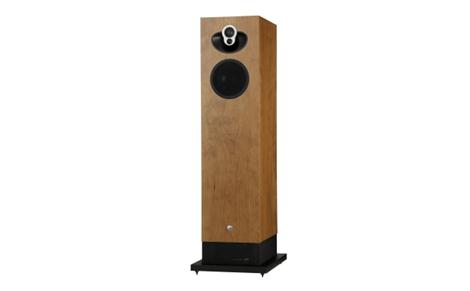
Linn Keilidh


I subscribe to the "rubbish in, rubbish out" school of thought that leads to the inevitable conclusion that a good deal should be invested in the "source" of a system.  Hence the departure of my LP12 in order to fund an upgrade from Squeezebox Touch / Cyrus DAC-X to the current Linn Akurate DS/0 Dynamik.  However, if you spend £10k on a source and £100 on a set of speakers, I reckon you're not getting the best sound for your investment.  Perhaps it should be more like 40% source, 30% amps, 40% speakers?  So having now got a much better source and set of amps, I think the speakers need to be next.  But they need to be good enough to reflect any later upgrades to source and amps.

So off to my friendly local Linn dealer to listen to some loudspeaker options.  Having heard my brother's Vienna Acoustics Beethoven Baby Grands recently on an all Linn system, I found them to be superb with acoustic, atmospheric music and great with vocals - imaging superbly, especially when we tried them with Cyrus power amps.  But put on some Yello (I listen to a lot of acoustic music, but I listen to a lot of Yello too) and it all fell a bit flat.  Not exciting enough to listen to, for me.

Here's what we had set up to trial the Linn speakers at the dealership:

My Linn Akurate DS/0/Dynamik
Linn Akurate Kontrol/1
Linn Akurate 2200/D amp for super tweeter
Linn Majik 6100/D amp for the other drivers
Linn Silver interconnects
2 x Linn K400 speaker cables
Quadraspire shelving

So apart from the AK/1 rather than my AK/0/D the system was as my own current system at home.  The room is in a large Victorian(?) terrace - ceilings about 11 feet high, very solid walls, about 13ft by 16ft at a guess, with the speakers firing across the shorter distance, and standing just inside each end of the bay - about 2ft 6ins away from the back wall of the bay.

We tried the following Linn speakers, both driven by the above amplification combination in fully active mode

Majik 140s first


then Majik Isobariks


Its difficult to A-B them as it takes about 20 minutes to swap the speakers over, get them level and to swap all the aktiv cards between the amps. None of the aktiv cards are common.

All FLAC ripped CDs were used, so all at 16 bit / 44.1 kHz. Tracks:

Blues Company - Dark Day; Cold Rain
Yello - Tangier Blue; Till Tomorrow
Eagle Eye Cherry - Shooting Up In Vain
Kiki Dee - Amoureuse (live)
Tom Baxter - Night Like This

Thoughts:

Both are way more detailed and easy to listen to than my Keilidhs -they manage to deliver a much more detailed treble with really clear, sharp edges, but without any hint of harshness or edginess
They both have good drive and deliver the rhythm well.
The 140 superficially seems to have more bass, but actually, the Isos go deeper and deliver a better definition of a tune and instrument pitch in the bass, whereas the 140s are loosing control - this is relative and the 140 is still a great listen.  We heard a couple of the tracks where the 140s deliver a bass tune, but the 'bariks deliver a more clearly defined tune and on some tracks there are 2 instruments playing in the bass that sound like one on the 140s.
Initially I was sat back on the sofa, but the sofa is backed up to the wall.  Sitting forward on the edge of the sofa markedly improved the bass definition, narrowing the gap between the two speakers.  At home my sofa is about 4ft from the back wall, so sitting forward was more realistic in terms of recreating my listening position, but takes you nearer to the speakers and I was already sitting closer to the speakers than I do at home.
The 'bariks deliver a very different mid-range when compared to the 140s and the Majik 109s I have at home - male vocals are better defined but recessed further back in the mix. Its a strange effect - I wouldn't say it was wrong, but it didn't feel right to me either.
The 140s produce a much more precise image (instruments are easier to pin-point) and the speakers themselves "disappear" as a point source better than the 'bariks. Not sure if that is due to the extra width of the 'bariks front baffle compared to the 140s?

Overall, I think the 'bariks are the better speaker, particularly the way they deliver bass. But they really are quite different in their presentation compared to the 140s, which came as a suprise - I wasn't expecting such a different presentation, given the common components in the "2k array".  I was expecting the 'bariks to be a more refined and defined version of the 140s.

I would be happy with either.
The 140s also look better to my eyes!

Thanks to the gents at HoL for the session.

Friday, 25 February 2011

Squeezebox Touch - Evolution Begins

No changes to the rest of the system (although there is a bit relating to cables...) so this is the first stages of experimentation with streaming audio and how it relates to the Logitech Squeezebox Touch in my system.  For the first part of this story, see the posting First Streaming Times below.
So we are at a Touch on its own into the rest of the system using a pair of Linn Black analogue interconnects.  And it sounds very detailed but flat, lacking space between the instruments, there's little width to the sound and its all lacking somewhat in terms of drive / pace / enthusiasm.  Its fine for background listening, but not so good for listening to music properly.  The CD player is still in a different league.  These comparisons are done between the same CD and the ripped version in FLAC, not against high res files which would be an unfair comparison.
 
Some research revealled that quite a few folks have been running external DACs on their Squeezebox Duets and Touches with some success, and there are various references to different (e.g. Fidelity Audio, Teddy PS) external power supplies making a difference.
There's then a whole separate story about a chance opportunity to go to a Naim dealer when Naim themselves were there demoing loads of kit.  I might write that one up sometime.  But the key relevant point here is that Naim have come out with a streaming device that sounds distinctly unimpressive to me when using its internal DAC, but plug it into the Naim stand alone DAC and it sounds astonishingly good.  Add the external power supply to the external DAC and you have something quite remarkable, but also rather expensive (approx £6.5k at this point).  So this, coupled with the internet chattosphere spurred me on to further experimenting.
I took the plunge and bought a Cambridge Audio DACMagic (for those with an eye for absolute detail, its a black one) along with the CA basic optical digital interconnect.  This is a major step forward and unleashes all sorts of extra information, deeper bass and the soundstage leaps out from between the speakers and pretty much doubles in width.  Hmm, very interesting.  If I then move the interconnect from the CD player (its an AudioQuest Topaz) there are further improvements in control and bass extension.  I purchased a What HiFi recommended Chord Chameleon Silver Plus interconnect (£125) which is an improvement on the Linn, but isn't as good as the Topaz (£180 for 0.5m over 10 years ago, but thrown in when I bought the CD player).
Now if I use the DACMagic and CD player as a transport then the CD player inbuilt DAC still wins out, and that's using an optical digital interconnect (not tried with a coax interconnect yet), so the DACMagic doesn't appear to be as good as the DAC inside the CD player.  Or is it?
The reason for this doubt is because of the next step I took.  I picked up an old coax digital lead that's actually designed for Meridian components to talk to each other, but only for control purposes, so its not exactly designed with sound quality in mind.  However, the improvement of this over the optical digital lead was astonishing.  Optical appears to be rubbish - that could be the Touch output, the DACMagic input, or the cable, or some kind of combination of all or some of these. The biggest difference here is difficult to describe, but if you imagine the "space" around, between and behind instruments is blackness, then the blackness was much blacker - I guess it means there's some kind of digital error correction or hash (jitter?) disappearing from the signal? The music is now going along with some proper drive and pace.  Foot is tapping at last. So if a rubbish cable is better than an optical one, what's a decent cable like?

So in comes a fairly basic but recommended digital coax cable - a QED Performance which is only £30.  Another step forward over the basic coax, but more subtle this time - mainly in the treble area, it's lost some of the remaining grittiness and splash.  Must get around to trying the DACMagic with the CD player transport and the coax interconnect soon, just haven't had the time.
So we're now at Touch - QED coax - DACMagic - Chord Chameleon. 

Comparison with CD player is now getting about 85% of the way there.  CD player still giving a bit more in terms of punch / pace etc, but from a pure detail point of view, there's nothing in it.  CD player still using the Topaz interconnect though, which is somewhat better than the Chord Chameleon.
So off to ebay to find a secondhand Topaz (you can't buy them new anymore).  No luck there, but did find 2 pairs of Audioquest Emerald interconnects which were top of their range at around £230 for 0.5m.  Got them for £40 and £42 so one for the CD and one for the DACMagic.  So here we have yet another improvement to both Touch / DAC and the CD player.  Again its subtle but its definitely there.  How can I describe this one?  Well its a kind of smoothness and flow to the music - whilst the instruments are very seperate and obviously so, the actual music seems to flow along much better and its not a bunch of accurately rendered notes, its a better illusion of a piece of music (I almost used the word accurate there, but we know its not about accuracy, because so few of us actually know what the original performance sounded like and we need to remember that much of the processing done during production is deliberately trying to make the recording NOT sound like the original performance).  This description probably isn't making much sense, that's why I'm not Jimmy Michael Hughes!
So we have Touch - QED Coax - DACMagic - Audioquest Emerald and that's now somewhere between 90 and 95% of the way to the CD player's quality. 

But here are the 2 killer points.  It now stands me at £500 and if I was starting from scratch I'd a choice between that and the £1700 CD player, I know which I'd choose!  But as soon as you add in the ability to play 24 / 96 files then its a hands-down win for the streaming tech - its a good 10% better than the CD player and leads to those evenings that are "just one more track" until its suddenly 1am!

So you have to wonder just how much DAC the Touch can support...
And what about power supplies, and do they matter, once you're no longer using the internal DAC?
 
If you're interested in more on the Squeezebox Touch, take a look at this article as there are mods you can do to your Touch without spending any cash: