"What a refreshingly honest blog about listening to music through hi-fi. So happy to see views based upon the enjoyment of music rather than so-called sound 'quality'." - Peter Comeau, Director of Acoustic Design at Mission / Wharfedale

Monday, 29 January 2024

A Retro Streamer, Is That A Thing? Linn's Iconic LK Series Brought Up To Date

For information only: this post is not a set of instructions nor is it intended to encourage any kind of modification of electrical products. As they say: "Do not try this at home".

Boxing Clever?

Back in 2007, Linn introduced the Klimax DS streamer and told the World that they believed streaming to be the future and that it outperformed their best CD player at that time (the CD12).  They also cemented the format of the new Klimax casework introduced earlier with the Klimax Solo power amp and the Klimax Kontrol pre-amp.

Klimax DS

With the full rollout of the lower Akurate and Majik ranges, Linn's iconic LK casework from the 1980s into the 2000s was fully retired.

Akurate DS

The LK range really span the whole of Linn's electronics product line with its origins in 1985 with the first pre-amp and power amp, the LK1 and LK2, right up to the 2000s.  The casework for those early components were product specific but they set the basic blueprint for what became the "standard" LK box - a 2/3rds width box when compared to most hifi of the time.

Some LK product examples:

LK2 and LK1


Linn Classik all-in-one system

Linn Klout power amplifier

To complete the history lesson in the context of this post, all streamers after the 2007 Klimax DS have been in Klimax, Akurate or Majik casework, plus some more specialist products such as the Sneaky MDS for multi-room installs and the "lifestyle" Kiko all-in-one product.

Some Linnies lamented the end of the LK casework, seeing it as a simple iconic design which embodied musicality over bling.

So, is there a way of building a streamer that will give that "retro" LK style but updated with more recent internals?

Basics?

Linn's later range of cases are, generally speaking, larger than the LK range.  Although the internals of the Klimax casework, which is machined from a solid billet of aluminum, is not very spacious.  Maybe there is a later project on that topic...
This means that something more compact needs to be sourced to form the basis of a streamer inside an LK case.  LK cases need to be sourced too, which is easy if you want to dismantle a working product (and pay the prices of working products), but very much harder when you look for dead products to use - Linn's equipment being so reliable, even many 30 year old products are still working well. Sources of cases are very welcome - please add to the comments below!

As mentioned above, there is the Linn range of streamers that are built primarily for multi-room installations.  The intro level is the Sneaky Music DS (now discontinued in favour of the multi-zone Kustom DSM product) which is a streamer and amplifier in one (it is not an all-in-one product as it does not have the ability to accept other sources into its pre-amp).  It is housed in a very simple clamshell style case around a rigid chassis.  8x screws open up the case and reveal the innards.


I already use a Sneaky Music DS in the workshop system, lightly customised (or kustomised?).

Workshop Music DS


A Good Fit?

So, does a Sneaky Music DS fit inside a standard Linn LK box?
No, the basic chassis is too wide.

What might've been a day's project therefore become more involved.  It started with stripping the internals of the existing LK box and removing the main circuit board and PSU from the Sneaky (the IR board came later). 

Inside of Sneaky Music DS before dismantling

The empty Sneaky Music DS chassis (IR board still in place, top right)


Then, several orientations / positions of the circuit board and PSU were considered - primary focus being on ensuring existing mains electrical safety is maintained, the second on minimising change.  Several things needed to be taken into account on the orientation decision:
  • Electrical safety
  • Ease of extending the connections from the board to the back panel
  • Closeness of audio circuits to the power supply
  • Where mounting points need to be drilled into the LK chassis
  • Room for the first stage heatsink
  • Minimising cable changes for the power supply
  • Ensuring the power supply heatsink makes good contact with the enclosure


You can see the final orientation chosen in the later pictures.

I also wanted this first project to be purely a DS, rather than the full Sneaky Music DS with an amplifier - to think about this as a source, rather than an amplified room solution. It would therefore fit better into a existing LK based system as a new source format.
The Sneaky case has slots in the top and bottom to allow cooling of the power amplifier modules which have their own heatsink.  That would mean the LK case would need to be a vented version too - I didn't want to go down that route on this project.
A search through the settings options on Linndocs - and the impact of those settings - established that the "volume control off" setting also disabled the power amplifier - resulting in minimal heat production.  So this solution has to be configured that way in Konfig or in the online Manage Systems tool - I left the most immediate heatsink attached to the power amplifier chips and it is connected to the casing using metallic mounts, so if there is any residual heat it will be dealt with.

So a DS it would be then.  This had another couple of implications - a need for a new, custom, back connector panel (omitting the speaker terminals and the old skool Linn multi-room system connections) and the ability to leave the donor Sneaky Music DS chassis in one piece - enabling the boards and PSU to be transferred back there if required in the future.

Quick Build?

In general terms, this process lead to a fairly straightforward build.  Mechanically the existing LK rear panel needed to be cut away and replaced by a custom version, but electrically I needed to find a way to transfer the required ports (ethernet, audio out, SPDIF out, Toslink out etc.) to the rear panel, in addition to a "fallback" facility.  In previous projects I've attempted to remove an external connector (such as audio out) from a circuit board to be replaced by cables, I found it far too easy to damage the delicate tracks on the circuit board this way.  So "jumper" cables looked to be the best option. Although this looked simple enough, sourcing suitable cables took a while to find and then to be delivered. Then some needed some further modification...
  • For Toslink I found a "pass through" panel connector that has mounts and female connectors on both sides - combine this with a short optical cable (one end having a swivel 90 deg mount) solved that one.  (in the later pictures this is the braided silvery grey cable)
  • I wanted to be a bit flexible on the route for audio out so chose a pair of standard interconnects with 90 deg connectors each end - then cut off one end of this cable so it can be soldered to a panel mount pair of phono sockets on the back panel.
  • Mains was easy - the existing LK rear panel socket remains as does the front panel switch and the existing connector is directly compatible with the Sneaky power supply.  The front panel LED "on" indicator we'll get to soon.
  • SPDIF - I chose a panel mount single phono socket.  However, in the Sneaky its outer connection has no electrical connection to the Sneaky chassis - so I needed to find a nylon external washer and a nylon "stepped" T washer internally where the leg of the T goes around the phono socket and through the back panel to create electrical isolation.  The correct depth of T couldn't be found anywhere so I purchased something too long then filed it down to size.  The connection from the Sneaky board SPDIF to the new external connector was a simple shortened phono cable.
  • Fallback - this is a tiny microswitch on the circuit board. Fortunately it has dual orientation mounting which means there are 2x tabs on the top of the switch that replicate the bottom connections.  Cables soldered to these tabs are taken to a stainless steel push switch - another component that had to be ordered specifically for the project.
  • Finally - ethernet.  After much searching I found a very short cable that has a normal RJ45 plug on one end (to plug into the Sneaky board) and a chassis mount socket on the other end.
So with all the connections sorted, the build got underway, trial fits and test power-ups continue throughout the project:


The first modification was to remove all the existing threaded mounting bosses in the LK chassis that would not be used and would be hidden under the circuit board - short circuits are not a good idea.  I left the bosses in other areas in case they could be used for cable tidying clips.  A power file made light work of this job.  The positions of all the original Sneaky circuit board mounting points were also marked up and 4mm holes drilled through (the screws are 3mm, but 4mm allows a little "tolerance").

LK bare chassis - black dots are for 4mm holes, arrows for bosses that need to be filed away.


LK chassis with bosses removed and Sneaky board mounting holes drilled

Closer view of removed bosses.

The power supply location was then addressed - drilling through the side of the LK chassis and countersinking to allow the top sleeve to still slide over the main chassis without fouling on screw heads.  Also, because the power supply unit is in a different orientation with more space around it, a angle strip of aluminium was bonded to the side wall to ensure good locating.  

A small amount of countersinking on the underside - note the need to relocate one of the feet by about 2mm

Countersunk hole in side panel for PSU mounting

I didn't want to drill the front panel of the LK box, keeping it as clean and traditional as possible.  So a hole is cut into the front edge of the base panel for the IR receiver - not sure how well this will receive a signal, so will see how that goes.  Also to keep the front panel clean, the existing green "power on" LED is re-purposed to function as the original blue status LED that's provided on the Sneaky.  The connectors used by Linn are not branded and I have not been able to track down the correct product.  However, an existing common industry connector has the correct pin spacing and a little work with the powerfile on the outer dimensions of the plug ensures a good fit.

Modified connector

Connecting the green "power" LED to the Sneaky LED port

Hole for IR sensor - it sits on its own very small daughter board

Additionally M3 10mm standoffs are added to the underside of the Sneaky circuit board. These align to the new holes in the base of the LK chassis and are secured using black dome headed M3 allen bolts from underneath.

M3x 10mm standoffs. This is an early trial fit - completed project has shakeproof washers between the nut and the circuit board

The final element is to address the rear panel.  A connector layout was sorted on paper then the plan for cutting out the existing rear panel marked up - for strength of the existing chassis and to support the new rear panel, cutting is kept to a minimum.  The rear panel is formed from a new sheet of aluminium then the holes drilled or cut out with a jigsaw, checking dimensions and fit iteratively.

Rear panel cutaway, retaining as much as possible for strength and to support new rear panel

One of the many trial fittings of the new rear panel. In this photo you can also see the aluminium angle strip bonded to the side panel - this helps with locating the PSU.
Random selection of isolating plastic washers on hand.  Of course, as usual, the exact size of washer for the SPDIF connector was not available, until Amazon delivered the solution...


And Finally?

Finally? Well, these things are often revisited later. But for now we have a fully working DS as a source in an LK box, so mission accomplished.  Finishing touches included several coats of spray satin black paint for the rear panel and labelling from a Brother label printer.

There may be follow ups, perhaps a fully functioning Sneaky Music DS with the amplifier in play too.  Perhaps something completely different!

Please leave any comments / questions below, and thanks for reading.


Friday, 1 December 2023

Acoustica Show: New Naim 200 and 300 Series. November 2023 - Pictures and Review

 In the past Chester dealer Acoustic has put on some enjoyable small shows at the DoubleTree hotel, featuring up to 20 rooms and covering most if not all of their portfolio of products.  You can read about them here:

April 2019

April 2018

This time was different.  It was promoted as a hifi show, but in reality it was a showcase for the new range of Naim "Classic" products - streamers, pre-amps and power amps in the Naim middle ground.  Naim range from their all-in-one Unity products, through 200 series, 300 series, 500 series and up to the stratospherically priced Statement pre-amp and amps.  So the new 200 and 300 series were featured here, in kind of a local "launch" event.  So rather than 15-20 rooms, there were 5, each with a different combination of the new electronics and a pair of speakers available from Acoustica's range.  A number of Naim "ambassadors" were on hand to answer questions.

I suppose this might have been a bit traumatic for long term Naimists - the transition from green lights to white lights is probably the most controversial parts of this new range.  That and concern about the perspex parts of the kit getting scratched like turntable covers.  I had a couple of Naim system owners along with me for 2nd and 3rd views on what we heard.

Below are images of the various systems on offer. I won't be reporting against each one this time, rather I will summarise my thoughts on the whole of the show, after the images. Worth noting that each room had a list of the equipment in use (minus cables) which is very helpful, but still oddly unusual at hifi shows.

NSS 333 Streamer / NAC 332 Pre-Amp / UnitiCore / 2x NPX 300 PSUs / 2x NAP 350 Mono Power Amps / B&W 801 D4 Speakers. £90,000 plus cables, rack etc.


NSC 222 Streamer & Pre-Amp / NPX 300 PSU / NAP 250 Power Amp / Focal Utopia Diablo Speakers. £37,000 plus cables, rack etc.


NSS 333 Streamer / NSC 332 Pre-Amp / 2x NPX 300 PSUs / Innuos Server / Exposure VNX Active Crossover and its PSU / 3x NAP 250 Power Amps / Kudos Titan 808 Speakers. £86,000 plus cables, racks etc.


I didn't get an image of the components here, but probaby NSS 333 / NSC 332 / Innuos Server / 2x NAP 350 / KEF Blade 2

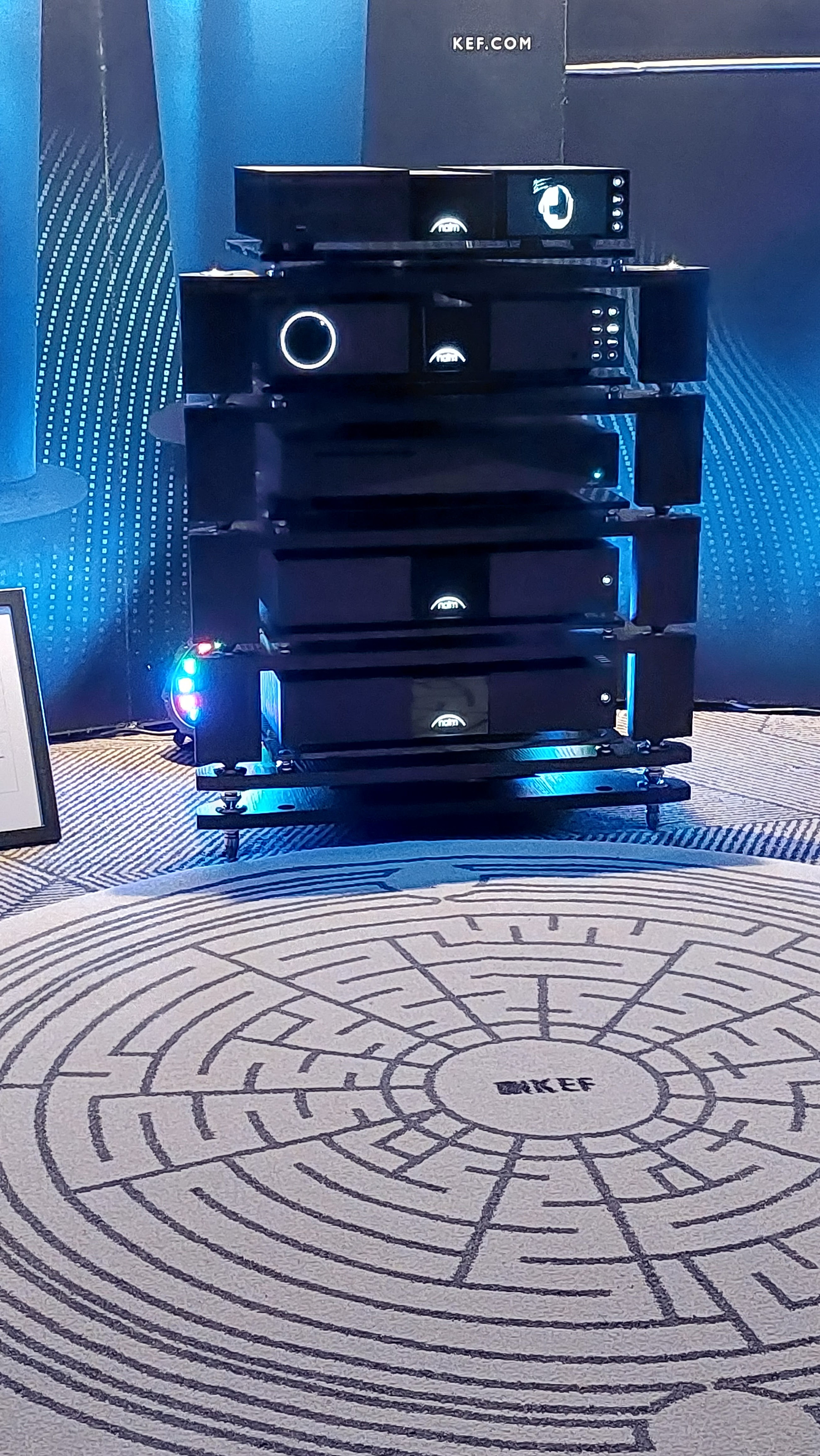
KEF brought their own rug - it depicts the pattern of the "meta" component of their speakers which is a rear reflection dispersal technique for their tweeter / midrange unit


NSS 333 Streamer / NAC 332 Pre-Amp / UnitiCore / 2x NPX 300 PSUs / 2x NAP 300 Mono Power Amps / Dynaudio Confidence 60 Speakers. £81,000 plus cables, racks etc.


THOUGHTS

If you're a fan of Naim's earlier "chrome bumper" and "olive" electronics, you might say that this new equipment is a return to form for Naim.  If you're not, then you'll consider that Naim has taken a step backwards.

Curiously, despite the hefty price tags of all the above systems, most of them were using Naim's lower cost (and in my experience, rather rough sounding) NACA5 speakers cables rather than the excellent Naim SuperLumina cables, which would've added £2,500 or so to the simplest of these systems.  The official explanation for this was "to prove that Naim kit doesn't need fancy speaker cables to work well".

Here's the thing about this collection of systems - every one of them was unlistenable.  Harsh, shouty, edgy, everything that those who didn't like earlier Naim systems would have criticised them for was in evidence here.  The Focals demonstrated this to the greatest extent, the Kudos Titans the least.  It was possible to listen to 3 or 4 tracks with the Titans (I normally find Kudos speakers in systems I enjoy at shows, including those with the previous Naim Classic electronics) but they were essentially part of the "least worst" system at this event. More than 3 or 4 tracks would've been far too much effort.  We didn't even last a whole track in any of the other rooms, going around twice to make sure that our conclusions weren't down to a bad choice of music. All 3 of us came to the same conclusion.

So maybe the new electronics is a return to Naim's previous approach, or maybe they do need cables better than NACA5? On this evidence we can't tell, but its not a good start.


Tuesday, 24 October 2023

THIS WEEKEND! The Best UK Hifi Show of the Year.

 Coming this weekend - the Wam Show!

At a new base near Barnsley, the show put on by enthusiasts for enthusiasts.

40 or so home systems brought together in an hotel for the weekend, you'll get to experience systems you'll never hear at commercial shows provided for you by people who are not trying to sell you anything. From budget to exotic, from vinyl to streaming, from vintage to brand new, from mass manufactured to DIY. Plus charity auction and raffle plus the bring and buy stall.

There's nothing else like it on the planet.

29th October 2023 from 9.30am

Holiday Inn, Barnsley Rd, Dodworth, Barnsley S75 3JT

Tickets available here:  https://show.hifiwigwam.com/

Monday, 23 October 2023

Exploring Naim Power Amplifier Alternatives - Guest Contributor Clive

He's back!  After only a short gap, Clive is back with more insights into experiences with his system.  Opinions are Clive's own. Enjoy.

A couple of months ago I was speaking with John Jackson aka JJ about improving the amplification of my system without swapping my 2 x 250s for 4 x 135s - I didn't want to increase the box count. My 250s have already been upgraded with the addition of Avondale HCR200 power regulators & John's Phoenix amplifier boards, sound amazing & outperform standard 135s so I appreciated it might be a tall order... but read on.


For those of you who don't know him, JJ is ex Naim Senior Test & Service Engineer & was Witch Hat Lead R&D Engineer before their demise. He is now operating under his own name as JJSThatcham (https://www.jjsthatcham.uk/) offering Naim servicing & upgrades. When I put my question to him, he told me that there was a modification that's he'd been thinking about for a while but not got round to trying - did I want to be a guinea pig?


The modification involved taking a pair of his highly acclaimed Dragon Newts (which will elevate the performance of your Hicap or Supercap) tweaking them to produce +/-42 volts rather than +24 and using them to power a specific section of the Phoenix boards, which would benefit from these ultra-low noise power regulators.


So I took a deep breath, put my system back to passive & handed one of my amps over. The development had to overcome a couple of hurdles. The first build of the 42 volt Newts wasn't a quiet as John wanted, but a redesign solved that. Secondly a variation to ensure PSUs start up safely in all conditions caused another issue but that was soon resolved. And about ten days ago John called me to say my amp was ready for collection.


Those of you that don't know my system may be thinking that, when I mention Aktiv& 250s in the same breath, there'd be something like a 52/supercap/snaxo/ in front of the power amps, and in fact there used to be. But the clue is in "Aktiv" rather than active. Now at the front of my system is a Linn Klimax System Hub which is a streamer/pre amp followed by a Klimax Exaktbox Organic which performs DAC & digital crossover filter duties. I found that the Linn Aktiv implementation is a significant improvement over the Naim snaxo. My speakers are now Kudos 707s although until recently I had SL2s with bespoke crossover filters created by SpeakerFilters / http://speakerfilters.blogspot.com/


So how does it sound? I've initially left my system passive so I can easily compare to the existing amp. Straight out of the box it was obvious that the addition of the Dragon Newts had made improvements but now they've got 200 hours /10 days under their belt, I sat down do a serious comparison. I pulled up my Test Tracks playlist (link at the end) & chose five tracks. First up was Mary Coughlan - The Beach. It was immediately apparent from the open opening notes that the sax intro has more detail, more of a rasp to it. When Mary starts singing, the vocal has more air & is more breathy. The guitars are more distinct & more defined. Notes start & stop with more precision. But the overall impression is of a more musical, more real, more live performance.


Other tracks I listened too were Hanne Boel - After Midnight, ERA - The Mass, John Campbell - Way Down in the Hole & Nils Lofgren - Little On Up (you thought I was going to say Keith Don't Go didn't you). It was the same story. Snare drums have more snap, bass lines are tighter, there's more air round instruments, there's more vocal inflection & everything is easier to follow. On the ERA track the timpanis sound more - well more like timpanis& the track has more drive. The Nils Lofgren track while it's easier to separate the two guitars, the whole track is more poignant, you can feel the emotion.


To summarize, the modification retains all the PRaT that Naim amps are famed for and gives you more of the attributes you'd want - tighter bass lines, more precision, more decay on sustained notes, more shimmer & shine on symbols, airiness & separation, greater insight into vocals & individual instruments. However it manages to do this in a hugely musical & real, non HiFi sort of way. It sounds more like a live performance, be that in a controlled studio environment, on a stage or in your local pub. It sounds like the musicians are having just so much fun. Fantastic. Swapping back to the original amp (very briefly) & that sounded a bit dull & pedestrian by comparison, & bear in mind that this is an amp that out performs standard 135s.


I was now itching to have Dragon Newts fitted to my other amp so I can go back to AktivExakt.


Well a couple of weeks later I got my second 250 back from JJ with Dragon Newts fitted & put my system back to AktivExakt and gave it a couple of weeks for the second amp to burn in. I listened to the same playlist (links at the end) that I used in my initial assessment of with / without the Dragon Newts - so how does it sound?


Short answer - awesome. Longer answer - I have my amps configured so that, rather than one for bass/mid & one for tweeters, one powers left bass/mid & left tweeter & the other the right speaker drive unit. Linn's ExaktAktiv implantation brings a depth & precision to the sound stage and separation between performers that you just don't get in passive configuration.


In ExaktAktiv configuration, the Dragon Newt modification to the amps brings an extra level of airiness /breathiness & dynamics to the performance. On the first track the rasp & inflection on the sax was more obvious, more real. Bass lines gain in solidity & Mary Coughlan's voice is anchored centre stage - close your eyes & she could be in the room with you along with the saxophonist & bass player (although that makes it quite crowded in my lounge)


On the Era track you really get more of a feeling of a massed choir. There's a greater sense of menace with the  timpanis like rolling thunder, and the driving bass lines sound like something from an Indiana Jones movie when the bad men are lowering him into the pit of hell


John Campbell's  voice sounds even more gravelly if that's possible, ravaged by years of smoking cigars & drinking cheap whisky. And if Little On Up doesn’t bring a tear to your eye you must be made of tough old boot leather.


Going ExaktAktiv takes the attributes that I experienced after JJ had added Dragon Newts to my first amp - tighter bass lines, more precision, more decay on sustained notes, more shimmer & shine on symbols, airiness & separation, greater insight into vocals & individual instruments and builds on them. But importantly, it does so in a hugely musical & real, non HiFi sort of way. It sounds more musical, more real, more like a live performance in your living room. It sounds like the musicians are having just so much fun. Fantastic.


As a foot note, I've heard the new white logo Naim 250, and I know some people are raving about it. For me, that is hifi, amazingly detailed but ultimately not engaging. If you are looking for the PRaT that Naim are famed for, but in spades, get an Olive 250 & have JJ breathe his magic on it. And if you fancy going down the ExaktAktiv route, but have speakers that aren’t supported (I previously had Naim SBLs & the SL2s) contact SpeakerFilters:  http://speakerfilters.blogspot.com/


Test Tracks (subscriptions may be required to access these playlists)

https://open.qobuz.com/playlist/7693858

https://tidal.com/.../5822bbac-97fc-4471-83bf-d6e284571a13


Monday, 25 September 2023

Kudos Audio - Exclusive Factory Visit, August 2023

Now a very visible and significant player on the international high quality audio scene, Kudos Audio has taken a different approach to producing music for its enthusiastic customers and are actively pursuing new ideas, as I type.

Favourable reviews are now the norm for the company's Titan range, including a number on Audiophile Musings.  Step this way to get a flavour of what the reviewers are saying about the company's products and some of the numerous awards and accolades bestowed upon them:

HiFi Critic Titan 505 

The Ear Titan 606

HiFi+ Titan 707

HiFi+ Titan 808

Hifi Critic Super 20A

What Hifi? Super 10A 

Hifi Choice C10 

Audiophile Musings "Sound of the Show" (Titan 808) and "Highly Commended" (Titan 505) at Chester Show, 2019

Audiophile Musings "Sound of the Show" at Bristol 2020 with Titan 707

Audiophile Musings went to find out what makes the company tick, being invited for an exclusive factory tour in the North East of England, UK - it turned into a 5 hour history lesson, factory tour, Titan 808 listening session, and zero nonsense...

Most of you will be familiar with the old joke:

Tourist: "how do I get to Town X"

Local: "well, I wouldn't start from here if I was you..."

I came away with the impression that the Kudos story has a similar origin.  Derek Gilligan, founder and head honcho at Kudos has a solid background to work from with a family in the music and live music PA business, but the route from there to today took an interesting path. Today's Kudos is a testimony to thinking differently, building a team that incudes family & those you can trust, being obsessive about quality and ensuring the basics are right.

As a fellow Darlingtonian, it was easy to chat with Derek about the pros and cons of "Darlo" and the area in which we grew up.  Different schools though, so not totally parallel experiences. I very much remember my early forays into hifi in the 1980s and they were supported by some canny purchases from used audio specialists in High Northgate, Darlington "North East Audio Traders". Derek became part of the team there and may even have served me in the shop, but thankfully neither of us remember! North East Audio Traders was a novel idea in the region at the time and was reasonably successful. Going to hifi shows to demonstrate their equipment was part of the game, but speaker consistency proved a challenge. Hence the guys at N.E.A.T. put together a small standmount of their own to enable easy comparison between equipment that's just not possible when a stock of used speakers is constantly changing from day to day. Soon reviewers were asking to review the speaker in its very rudimentary form, but were very complementary about the way it performed. Derek was involved in the speaker using a renowed driver from earlier speaker products that needed to be sourced from wherever they were still available from stock. Eventually this driver had to be re-manufactured once the speaker took off in the market. It was partnered with a modern dome tweeter. The NEAT Petite is now a very well known speaker and continues in a revised form to this day, as the Petite Classic.
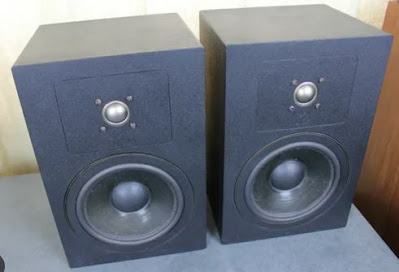
Original NEAT Petite Loudspeakers


The design process of Petite, based on listening for musicality and a try and re-try approach set the tone for the future. What Hifi? were impressed with the result "as tuneful as they come".  When demonstrating the speakers, N.E.A.T. used the exceptionally substantial Kudos speaker stands...

Derek parted ways with NEAT for a few years, pursuing other activities until he returned for a second stint with the company to work on speaker designs such as the Ultimatum, where we can see techniques such as isobaric bass loading being deployed, as it is in today's Titan range (also used elsewhere such as Linn's Akubarik). NEAT bought the Kudos brand as part of buying up the stock of speaker stands as Kudos' then owner moved on to different products and markets. During this time Derek had developed some design ideas he wanted to try but the opportunity wasn't presented to go in that direction.  Time for a new direction...

So we come to the inception of Kudos Audio as a speaker manufacturer in its own right - a "do or die", "all or nothing" decision for Derek and his wife.  With a good network of contacts in the industry and dealerships, understanding what was wanted in the market and what was possible from a design perspective, the initial Cardea products, although fairly conventional in construction, were very well received and the business was underway.  The basic tenets behind those early designs hold true today - listen, listen, listen, use high quality components, gentle slope crossovers to minimise component count and phase distortion, build in the UK using UK producers and components wherever possible. But the scale has moved on, as has the size and breadth of the product range.
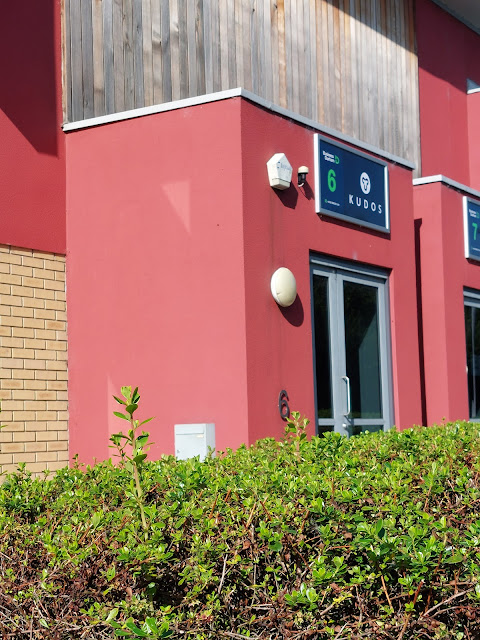

Based in the North East of England (close to Derek's roots) isn't the UK hifi heartland, but everything is within easy reach and, of course, electronic communications mean distance isn't the blocker it used to be.  The company is split across 3 sites on the same compact business park - storage, manufacturing and design / demo buildings. This is the second location for the company and it has grown into the current arrangements organically - annexing a next door unit here, installing a mezzanine floor there, plus the major investment in the design / listening / demo suite. Its a compact, cleanly presented, logically laid out facility. This appears to work very well for the core workforce, consisting of Derek, production manager Mark with Derek's son Louis looking after quality control and his daughter Kay joining the team on the week of my visit to take on office management, accounting etc. after several years experience in similar roles in other companies. The extended team includes another 7 colleagues across sales, marketing and export colleagues based locally or where the dealer network needs them to be.

We talked through the design and manufacture of the higher, and very successful, Titan range of products to understand the Kudos approach.  Essentially Derek uses the experience of existing designs and applies new ideas to those products or completely new concepts to push the boundaries of what's possible and what's effective - sometimes it shows promise, sometimes it doesn't, sometimes it takes very little refinement to be just what he's hoping for.  The exact percentage of those outcomes wasn't shared with me :)  An example is using isobaric loading for the mid-bass drivers in Titan 505, 606 and 707. Basically isobaric means 2x drivers - one internal, the other on the front baffle - linked by a sealed air chamber between those drivers, giving the impression of a much larger single drive unit in a larger cabinet. Its unusual in the industry to use isobaric so high in the frequency range, but Kudos found that allowing a minimal air gap around the voicecoil of the driver, coupled with "back to back" driver mounting reduced the effect of differences between drive units (even very expensive drive units are never identical) to give a better performance over a wider frequency range.

Another example of experienced based innovation is the cabinet construction of Titan.  Its core is a relatively thin MDF structure, the panels of which flex (the deflection is not visible to the eye) because the outer panels of the cabinet, in heavier gauge veneered MDF, are compliantly coupled to damp the flex of the inner cabinet wall. A mix of 2 existing, usually mutually exclusive, philosophies in the industry, but applied in a different way. The composition of the damping disks connecting inner cabinet to outer cabinet and the exact location of the mounting points were subject to the iterative try, listen, change, listen, change, listen approach until the best sounding materials and mounting locations were established. A further example of the design approach is that each panel in the internal cabinet has one of a number of thickness options - to vary the natural resonance of each panel rather than having all the panels contributing one resonance.
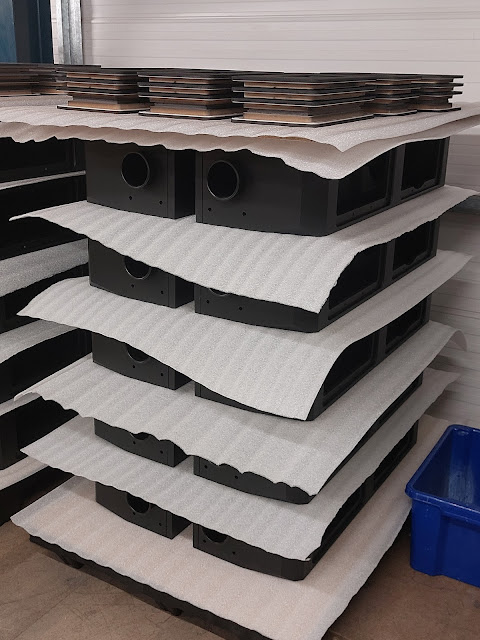
Titan 606 Inner Cabinets and Connector / Crossover Panels

Kudos work very closely with Norwegian driver manufacturer SEAS who have been found to be exceptionally co-operative and collaborative on driver design changes - be that cone materials, coil winding, cone shape, doping etc. etc. Only the basic driver basket remains unchanged for mid-bass drivers, everything else is available to change and Kudos exploits that opportunity with drivers going through several iterations before being custom manufactured to their final spec.  The Krescendo tweeter used in Titan is another example of the collaboration with SEAS, being based on a existing metal dome driver but with the magnet from a different SEAS model and the dome using a fabric and shape of Kudos' choice. As a component, compared to those in many other loudspeakers, the Titan tweeter is "reassuringly expensive".
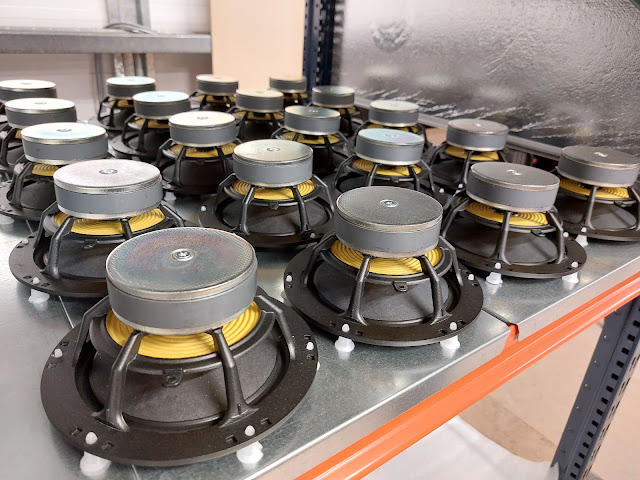
SEAS Mid-Bass Drivers to Kudos Custom Spec
 

We step through the build process.  Cabinets are, of course, Kudos designs, but built by specialist suppliers.  A subject of intense discussion in the UK speaker manufacturing industry right now as one of the major suppliers of cabinets to the vast majority of UK loudspeaker brands has abruptly ceased supply.  For a small company this means a great deal of disruption to source a new supplier, but this looks to be resolved for Kudos and supply will continue to be delivered to customers as there are good stocks of parts in place right now. Every cabinet (internal and external damping panels, stand components etc) are inspected for any imperfections before being accepted and placed into stock. With Titan the internal cabinet remains consistent and the external damping panels bring the differences in colours and veneers. A number of veneers are available as are piano black and white gloss.

Drive units come in from SEAS in batches, passive crossovers are constructed on the production benches. Crossovers for Titan are hand built on the connector panel with components being direct wired (no circuit board) and use very gentle crossover slopes and the natural roll-offs of the drivers in the cabinets as Kudos believe this reduces "stuff getting in the way of the music".  Its a relatively expensive way of making crossovers, but demonstrates the passion for getting the right end result.  All the components for a complete speaker pair - drivers, internal cabinet, external damping panels, crossover, stands, packaging, connector panels, etc, - are gathered together onto a single pallet.  This pallet is then transferred to the build area for assembly by one member of the team. Seeing the details of the drivers, and the layered construction of what look like relatively simple stands opens my eyes to how much effort has gone into the design of Titans, something not at all obvious to the customer. Every pair is then put through listening tests before being packaged ready for despatch. 

Alongside the build area is a newly constructed office unit and the basics needed to keep the team fed and watered through the day.

Titan 808 Crossovers - Bass on the Left, Mid and Treble on the Right
 

We move over to the design / listening / demo suite where, in typical Kudos fashion, we enjoy a straightforward sandwich and cuppa whilst listening to the system currently set up.  At this point we also discuss the "active" option for Super 10A, Super 20A and the Titan range, and why Kudos chose to go in that direction, another distinctive differentiator in the market. It is, unsurprisingly, a fairly simple answer - to get a better musical result.  As an independent manufacturer, with no ties to existing electronics partners, Kudos can work with multiple different active electronics partners with ease.  Linn, Naim, Exposure and Devialet options have been made available and the speakers can be converted to active operation with a simple change to links on the connection panel.  
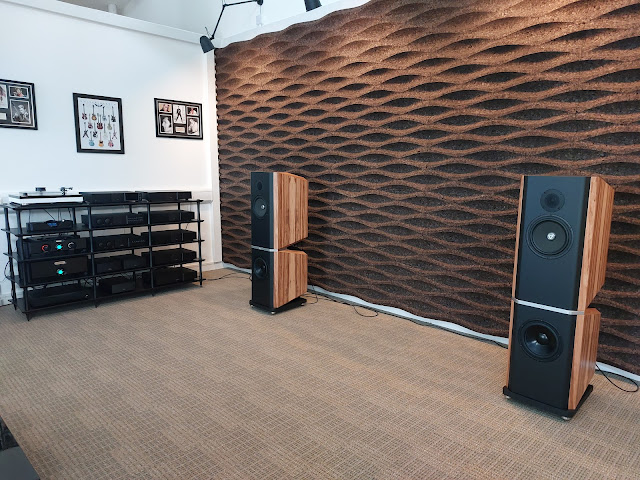
Listening Room with Titan 808

Kudos have long been a favoured brand of speaker amongst Naim electronics customers and that manufacturer's kit has featured extensively during the development of Kudos products and demonstrations at hifi shows (in passive and active form), along with Linn's Exakt active option. But today we have a system fronted by an Innuos server / streamer, Chord DAVE DAC, Chord Ultima Pre and Ultima Power amps. This was a surprise choice for me, given my past experience with Chord amplification hasn't been so enjoyable.  But this new Ultima range changes that completely, being musical, with coherent timing.  This system was feeding Titan 808s passively through, of course, Kudos KS-1 speaker cables. We range through some church choral recordings (great representation of the space), electronic dance music (great pace, controlled impactful bass lines) and Leonard Cohen (expressive grumbling vocals) and the time passes very quickly enjoying the music (note, the music, not the treble nor bass nor mids!).

Chord Stack on the Left In Use for Our Demo - alongside Naim including the active SNAXO crossover option. Another rack in the room contained other manufacturer electronics including Linn, currently being refreshed to Selekt spec.
What of the future?  Well Kudos have lots more ideas to take through their iterative, listening based process of product innovation and improvement. Some interesting ideas on drive units and active options could be on the way if they meet that essential criteria - is it musically more enjoyable than what went before? If today's products are anything to go by, the results will be interesting indeed.

Thanks very much to Derek and the Kudos team for your time, openess, straightforward discussion and hospitality.