"What a refreshingly honest blog about listening to music through hi-fi. So happy to see views based upon the enjoyment of music rather than so-called sound 'quality'." - Peter Comeau, Director of Acoustic Design at Mission / Wharfedale
Linn's 360 speaker was introduced in 2023, heralded as their best ever speaker product. It was certainly a huge step in the right direction after the somewhat long in the tooth 350. It features some interesting technology, particularly in the fully active version - such as Organik DAC / power amp modules with adaptive bias amplifiers, Exakt phase correction / time alignment and the cabinet that features no flat panels - improving dispersion and imaging.
Within about 6 months of its introduction Linn quietly dropped the beryllium tweeter in favour of a less toxic material - other than that little has changed in the 3 years since.
However, today, Linn launched an upgraded version with new upper bass and bass drivers - Audiophile Musings was invited along to the product launch at House of Linn in Manchester for the first ever demonstration of the product outside the Linn factory.
Those of you who know a little about the 360 will also notice another change - the availability of a full cabinet walnut veneer - a no cost option alongside the existing paint finishes.
Talking of cost - this new version has upped the list price of the fully integrated active version from £87.5k to £99.5k. The passive with active bass version sees a similar uplift of around £12k. Existing owners can upgrade for £16k but if you bought within the last 6 months the upgrade is the same as the uplift in the list price - £12k.
Linn's ambassador Paul was on hand to explain the differences in the drivers between the original version of the 360 and this latest iteration. In brief:
- the original used "off the shelf modified" drivers from a well-known driver provider
- the new version uses all-new Linn designed drivers built exclusively for them
- these are the first ever "designed from scratch" Linn drivers
- they're dubbed Pistonik - the design features in the upper bass and bass drivers
- they feature a large motor structure, an aluminium cone which is almost flat, a double layer suspension system and enormous linear (front to back) excursion
Audiophile Musings was invited to the first ever demo of these upgraded speakers outside the Linn factory. Thanks to Brian and Trevor at House of Linn for hosting the session.
The system tonight:
Turntable: Linn LP12 with Bedrock plinth, Keel SE subchassis, Ekos SE arm, Ekstatic cartridge, Urika II phono stage
Streamer / Pre-amp: Linn Klimax DSM/3 with Utopik PSU
Loudspeakers: fully integrated Exakt active original 360 with Utopik PSU and fully integrated Exakt active upgraded 360 with Utopik PSU
We started with a couple of tracks from Qobuz - which included some electronic, jazz and female vocals. As ever with the 360, I get a feeling of clarity and technical accomplishment, but not so much feeling nor emotion from the music. Good to get familar with the product again.
"This Is What You Are" by Mario Biondi And The High Five Quintet
"I Can't Stand the Rain" by Beverley Knight
"End of the Road" by Infected Mushroom
We then had a 10-15 minute break whist the team swapped over the 360s to the upgraded version. When going back into the dem room there was a 3 or 4 minute video explaining the driver upgrades and the technology within them - some nice graphics etc.
Then we went back to the same tracks and the difference in the bass was immediate and obvious - the new drivers clearly exposed the old drivers as somewhat woolly and vague (in absolute terms) - not just in terms of articulating the sounds of the instruments, but more obviously in the clarity of when the note(s) start and when they stop. This was not a subtle upgrade, but something quite clearly worthwhile. The solidity and punch on the Infected Mushroom track was a particularly good way to bring out the capabilities of the new drivers. There's also more texture and detail in the bass lines, more insight is perhaps a good way to describe this.
A few more tracks were selected by Linn including some on the LP12:
"What I Am (Album Version)" by Edie Brickell & New Bohemians
"You Look Good To Me" by Oscar Peterson (on the LP12)
"Satisfied Mind" by Mavis Staples
"Shostakovich Symphony No. 10 in E Minor, Op. 93: II. Allegro" by Philharmonia Orchestra - The Simon Rattle Album (on the LP12)
"Secret Heart (Album Version)" by Ron Sexsmith
"Penpals" by The Stan Tracey Quartet
"Who'll Stop The Rain (John's Version)" by John Fogerty
Then the track choice was handed over to the attendees at which point we enjoyed the following:
"Kiss the Sky" by Tash Sultana
"Waiting on the World to Change" by John Mayer
"Yamore (feat. Cesaria Evora, Benja (NL)" by Moblack and Salif Keita
"A Plea" by Flea
"Counting (Remastered)" by The Motels
"And They All Came Marching Out of the Woods" by Jakob Bro, Thomas Morgan & Jon Christensen
"Mahler Symphony No. 5 in C-Sharp Minor: I. Trauermarsch. In gemessenen Schritt. Streng. Wie ein Kondukt" Sir John Barbirolli
All of the above cemented the initial impressions - great tightly controlled bass (possibly one of the bess bass performances of any system I've heard) and that extremely clear but unemotional overall presentation. If you have 360 and the wherewithal to have the upgrade, its pretty obvious that its something worth considering. If you have mostly liked the 360 but you felt the bass could be tighter, punchier, more revealing or all 3, now's the time to go take another listen. It will be interesting to see if Pistonik (3 years in the making) will filter down to the by-now-inevitable 2nn series speakers from Linn - that's the gap that needs plugging as soon as possible.
Now in its third year, the Maverick (nee Wigwam) Show is the one that brings you authentic music lovers' systems into one place, once a year. 35 or so systems put together by enthusiasts, for enthusiasts! As far as Audiophile Musings is aware, its the only national show of its type on the planet.
Whilst there are a small number of commercial rooms and vinyl sales to help with funding, this is by far and away the most relaxed show you can go to - 90%+ of the rooms are doing nothing more than demonstrating some system builds that help you hear lots of options, approaches and budgets in one day. From DIY, through budget, to high end - vinyl, digital, valve, solid state, panel or more traditional speakers - its all there to enjoy, for only a tenner!
Catch Audiophile Musings in Room 215 with Linn Akurate Exakt DSM streamer. Linn Akurate Exaktbox-i processor, DAC and multi-channel power amp driving PMC Twenty.22 speakers.
There will be a raffle and a bring and buy hifi pop-up shop in aid of the show's charity - Barnsley Hospice.
Its a bargain day out for the enthusiast and for music lovers! More details at the link:
He's back! After only a short gap, Clive is back with more insights into experiences with his system. Opinions are Clive's own. Enjoy.
A couple of
months ago I was speaking with John Jackson aka JJ about improving the amplification of my system without swapping my 2 x
250s for 4 x 135s - I didn't want to increase the box count. My 250s have
already been upgraded with the addition of Avondale HCR200 power regulators
& John's Phoenix amplifier boards, sound amazing & outperform standard
135s so I appreciated it might be a tall order... but read on.
For those of
you who don't know him, JJ is ex Naim Senior Test & Service Engineer
& was Witch Hat Lead R&D Engineer before their demise. He is now
operating under his own name as JJSThatcham (https://www.jjsthatcham.uk/) offering Naim servicing & upgrades. When I put
my question to him, he told me that there was a modification that's he'd been
thinking about for a while but not got round to trying - did I want to be a
guinea pig?
The
modification involved taking a pair of his highly acclaimed Dragon Newts (which
will elevate the performance of your Hicap or Supercap) tweaking them to
produce +/-42 volts rather than +24 and using them to power a specific section
of the Phoenix boards, which would benefit from these ultra-low noise power
regulators.
So I took a
deep breath, put my system back to passive & handed one of my amps over.
The development had to overcome a couple of hurdles. The first build of the 42
volt Newts wasn't a quiet as John wanted, but a redesign solved that. Secondly
a variation to ensure PSUs start up safely in all conditions caused
another issue but that was soon resolved. And about ten days ago John called me
to say my amp was ready for collection.
Those of you
that don't know my system may be thinking that, when I mention Aktiv& 250s
in the same breath, there'd be something like a 52/supercap/snaxo/ in front of
the power amps, and in fact there used to be. But the clue is in
"Aktiv" rather than active. Now at the front of my system is a Linn
Klimax System Hub which is a streamer/pre amp followed by a Klimax Exaktbox
Organic which performs DAC & digital crossover filter duties. I found that
the Linn Aktiv implementation is a significant improvement over the Naim snaxo.
My speakers are now Kudos 707s although until recently I had SL2s with bespoke
crossover filters created by SpeakerFilters / http://speakerfilters.blogspot.com/
So how does
it sound? I've initially left my system passive so I can easily compare to the
existing amp. Straight out of the box it was obvious that the addition of the
Dragon Newts had made improvements but now they've got 200 hours /10 days under
their belt, I sat down do a serious comparison. I pulled up my Test Tracks
playlist (link at the end) & chose five tracks. First up was Mary Coughlan
- The Beach. It was immediately apparent from the open opening notes that the
sax intro has more detail, more of a rasp to it. When Mary starts singing, the
vocal has more air & is more breathy. The guitars are more distinct &
more defined. Notes start & stop with more precision. But the overall
impression is of a more musical, more real, more live performance.
Other tracks
I listened too were Hanne Boel - After Midnight, ERA - The Mass, John Campbell
- Way Down in the Hole & Nils Lofgren - Little On Up (you thought I was
going to say Keith Don't Go didn't you). It was the same story. Snare drums
have more snap, bass lines are tighter, there's more air round instruments, there's
more vocal inflection & everything is easier to follow. On the ERA track
the timpanis sound more - well more like timpanis& the track has more
drive. The Nils Lofgren track while it's easier to separate the two guitars,
the whole track is more poignant, you can feel the emotion.
To
summarize, the modification retains all the PRaT that Naim amps are famed for
and gives you more of the attributes you'd want - tighter bass lines, more
precision, more decay on sustained notes, more shimmer & shine on symbols,
airiness & separation, greater insight into vocals & individual
instruments. However it manages to do this in a hugely musical & real, non
HiFi sort of way. It sounds more like a live performance, be that in a
controlled studio environment, on a stage or in your local pub. It sounds like
the musicians are having just so much fun. Fantastic. Swapping back to the
original amp (very briefly) & that sounded a bit dull & pedestrian by
comparison, & bear in mind that this is an amp that out performs standard
135s.
I was now
itching to have Dragon Newts fitted to my other amp so I can go back to
AktivExakt.
Well a couple of weeks later I got my
second 250 back from JJ with Dragon Newts fitted & put my system back to
AktivExakt and gave it a couple of weeks for the second amp to burn in. I
listened to the same playlist (links at the end) that I used in my initial
assessment of with / without the Dragon Newts - so how does it sound?
Short answer - awesome. Longer answer - I
have my amps configured so that, rather than one for bass/mid & one for
tweeters, one powers left bass/mid & left tweeter & the other the right
speaker drive unit. Linn's ExaktAktiv implantation brings a depth & precision
to the sound stage and separation between performers that you just don't get in
passive configuration.
In ExaktAktiv configuration, the Dragon
Newt modification to the amps brings an extra level of airiness /breathiness
& dynamics to the performance. On the first track the rasp & inflection
on the sax was more obvious, more real. Bass lines gain in solidity & Mary
Coughlan's voice is anchored centre stage - close your eyes & she could be
in the room with you along with the saxophonist & bass player (although
that makes it quite crowded in my lounge)
On the Era track you really get more of a
feeling of a massed choir. There's a greater sense of menace with thetimpanis like rolling thunder, and the
driving bass lines sound like something from an Indiana Jones movie when the
bad men are lowering him into the pit of hell
John Campbell'svoice sounds even more gravelly if that's
possible, ravaged by years of smoking cigars & drinking cheap whisky. And
if Little On Up doesn’t bring a tear to your eye you must be made of tough old
boot leather.
Going ExaktAktiv takes the attributes that
I experienced after JJ had added Dragon Newts to my first amp - tighter bass lines, more precision, more
decay on sustained notes, more shimmer & shine on symbols, airiness &
separation, greater insight into vocals & individual instruments and builds
on them. But importantly, it does so in a hugely musical & real, non HiFi
sort of way. It sounds more musical, more real, more like a live performance in
your living room. It sounds like the musicians are having just so much fun.
Fantastic.
As a foot note, I've heard the new white
logo Naim 250, and I know some people are raving about it. For me, that is hifi,
amazingly detailed but ultimately not engaging. If you are looking for the PRaT
that Naim are famed for, but in spades, get an Olive 250 & have JJ breathe
his magic on it. And if you fancy going down the ExaktAktiv route, but have
speakers that aren’t supported (I previously had Naim SBLs & the SL2s)
contact SpeakerFilters: http://speakerfilters.blogspot.com/
Test
Tracks (subscriptions may be required to access these playlists)
Something a little different this time - a review of three power amplifier choices by occasional guest contributor Clive, one of the moderators of the popular Linn Hifi and Music Enthusiasts Facebook group. Over to you Clive...
I'm fairly happy with my system, but, well, there's always room for improvements & I'd been thinking maybe an amp or speakers upgrade.
My system at the time of writing comprises: - Linn Klimax System Hub (Classic); Linn Klimax Exaktbox with Organik DACs; 2 x Naim Olive 250s with Avondale HCR200 regulators & Witch Hat Phoenix amplifier boards; Naim SL2s supplemented with a BK Electronics Double Gem sub; English Electric 8 Switch & QNAP TS-251+ NAS drive; Witch Hat Morgana interconnects & Spectre speaker cable; Dedicated consumer unit with 5 x spurs in 6mm sq twin & earth & 6mm sq equipment leads
Maybe for those not in the know, I should explain the Linn System Hub & Exaktbox. The system hub is a streamer only - it just controls the playlist from my NAS drive or streaming service (Qobuz or Tidal) & other inputs (TV Box & Chromecast) and acts as a pre-amp with digital volume control. It has no DAC and passes a digital stream of music and instructions to the Exaktbox. The Exaktbox is a digital crossover & 6 channel DAC (using the latest Linn Organik DACs). The advantage of having the crossover in the digital domain is that it can be far more accurate that an analogue crossover (I used to have a Naim SNAXO but this set up is far superior). The analogue outputs of the Exaktbox are fed to power amps - one for each speaker drive unit - so 2 x 250s in my case, SL2s being a 2 way speaker design.
In the past I've compared an Naim Olive 250 vs Naim Classic 250DR vs Linn Akurate 2200. I felt that the 250DR was more detailed but the Olive 250 more musical. Comparing Linn to Naim - Linn allowed all the separate elements of the music to be followed & analysed whereas Naim felt more like a band performing. Both good - just a difference of presentation.
So I was interested a couple of months ago when I had the opportunity to compare, in passive configuration, one of my modified 250s vs a new White Logo Naim 250 vs Linn Klimax Chakra Twin at a dealers showroom using a Linn Selekt Edition streamer with dual mono Organic DACs & Kudos 707s. When you consider the price differential Olive 250 with Avondale & Witch Hat boards ~ £1.7-2k vs New Naim 250 £5.7k vs Klimax Twin £9.4k you'd think it would be a fairly uneven contest... But was it? First up was the New White Logo Naim 250 - bags of detail & pace but I found myself analysing the music rather than enjoying it. My feet stopped tapping! Switching to my modified Olive 250 & the foot tapping was immediately back. Sure it was a marginally less informative, but ultimately more enjoyable. Finally the Linn Klimax Twin. This was somewhere between the two. A bit more detailed than the Olive 250, more musical than the New White 250. But was it worth the £18.8k price tag for the upgrade (remember I need a pair of them)? I didn't think so - maybe a used pair but I would want to hear one in my home system. So where did this leave me? Neil of Audiophile Musings & Speakerfilters has suggested to me a few times that I should try Lejonklou Tundra 2.5 amps in place of my Naim 250s. For those of you who haven't read Neil's previous posts about these amps - Fredrik Lejonklou used to work with Linn beforedeciding that he could build better amplifies for a much lower price. The Tundra Stereo was first released in 2012 & is now in its ninth iteration in version 2.5 which sells for just under £3.25k. Neil offered to lend me a spare Tundra he has to try in my system, which coincidently is for sale, so no hidden agenda there (editor's note: it was a completely above board agenda, as it happens!). At the same time I've borrowed a Klimax Twin to try at home.
First thing was to put my system back to passive as I only had one Tundra & one Twin. It's a fairly straight forward job with SL2s as they have external passive crossovers and put the Exaktbox into pass through mode so the DACs are being used but not the digital crossover. I then played five of my favourite test tracks to get a feel for how it sounded passive. The overall character remained unchanged although a little of the precision of the timing & sound stage was missing but still very enjoyable.
Before putting the Tundra into my system, I'd been warned that: a. They have less gain ~21dB compared to the Naim/Linn ~29dB so I would have to turn the volume up +8 b. They take about 20 minutes to warm up - not after being switched on, but 20 minutes actually playing music to come fully on song, not that they are bad initially, they just get better with playing. So when I first switched to the Tundra, I tuned the volume up & played the five tracks through before going back to the beginning for a serious listen. The first thing that struck me was how similar the sound was to that which I was used to. The Tundra has similar PRaT that Naim amps are famous for. The Naim maybe had a smidge more authority on bass lines, the Tundra maybe a smidge more transparency in the mid-range… But I would be hard pushed to choose one over the other - both are very enjoyable.
Next up was the Klimax Twin. I was immediately taken by how much better it was than the Akurate 2200 I'd heard a few years ago. Previously I've found Linn amps great if you want to listen to all the individual strands of the music, whereas Naim amps present the music as a whole performance. While this is still true, the Twin is much more similar to the sound I am used to from my Naim amps & more enjoyable for it. The Twin is a maybe smidge more detailed & informative but the Naim has more swing & induces more foot tapping. Apart from the wallet bending price of a pair, I could probably live with the Klimax Twin… if I hadn't heard my 250s or the Tundra.
I was able to have both the Tundra & the 250 in my system rack at the same time so it was only a minute or so to swap from one to the other to do a tune dem. So having warmed the Tundra up again, in an effort to differentiate between it & the Naim, I played some tracks that I don't know on one then the other. Now the differences became a bit more apparent. While the 250 still had a little more weight & authority in the bass lines, where the Tundra really excels is in conveying the emotion in the music. It's difficult to explain in words but I feel that I can really hear the musicians putting their heart & soul into the performance, whether they are vocalists, guitarists or a saxophonist you just get the feeling that they are giving it that bit extra. The listening experience is just that bit more… well musical, more fluid although it still wasn't night & day differences.
A few days later I had a friend round who has no interest in hifi but enjoys music, particularly to dance to rather than sitting down listening at home. First I played a couple of tracks she wouldn't have heard previously using the 250 before switching over to the Tundra. Her initial reaction was that the presentation of the two was quite different. The 250 was laid back & enjoyable whereas the Tundra was more up front & in your face. She didn't like the way that the Tundra demanded her attention, demanded to be listened to. Interesting. Then we played a number of tracks that she knew from dancing switching back & forth between the two. Now her preference switched to the Tundra, hearing the additional nuances it brought to the experience, describing it as more engaging as though the musicians were performing just for her. By the end of the evening she said that both were enjoyable but on balance although the Tundra is more demanding, she felt it is also (a bit) more engaging.
So am I swapping my modded Olive 250s for Tundras? Hmmm! The 20 minute warm up is a bit of a downer. Most mornings, I have a listening session that's, at most, ½hr while I have a cup of coffee after I've done my morning workout & there would be that nagging doubt that the amps are not performing at their best for the majority of that time. Additionally, I've been in discussions with John Jackson (ex Naim & Witch Hat) about an further mod to my 250s to add another regulator to power the amplifier board to create a Phoenix Plus board if you like and elevate the performance further.
So the jury is still out.
At the end of the day, the Tundra is a very musical amp & should certainly be on your shortlist to audition if you are in the market for amps at this sort of level. In my view it's considerably more musical than the latest generation Naim 250 which, to me, is very hifi, which is great if that's what you are looking for but for me, Naim have lost the PRaT that they were renowned for. I also preferred the Tundra over the Klimax twin which, considering its ~⅓ of the price, makes the Tundra something of a bargain. And if you have a standard Naim Olive 250, again the Tundra will be an upgrade. At the end of the day, you could argue that my Naim 250's are no longer Naim amps - all that remains of the original amps is the case, transformer & the sockets.
Thank you to Neil Hallworth for the loan of the Tundra, & Nigel Moore for the loan of the Klimax Twin
There are a couple of commercial rooms, but beyond that there are 40+ rooms of systems put together by enthusiasts purely for your listening pleasure - no selling! Each room will have a system brought along to the hotel by a HifiWigwam member, set up for the weekend, playing whatever music they fancy (or you request!) to let you hear real systems put together with love and care for the enjoyment of music.
It's unique amongst hifi shows and not to be missed.
This year its at a new venue, just outside the railway station at Stoke on Trent on Sunday 2nd October.
More information at the show website, tickets are only £10
A new speaker brand will launch at the Horten Hifi Show in Norway on 6/7 November 2021.
The A-Ha brand is a local blend of Norweigian & Swedish skills and will bring its first model, the A2a to the show. It will be launched as an active ready version designed to work with Linn Exakt electronics using Exakt digital filters developed in Wales by SpeakerFilters.com. Passive and built-in active versions are planned.
The recent introduction of the new Linn Klimax System Hub (reviewed here) means there are a few of the previous versions appearing on the used market - a small glut means great pricsd so the 'Musings system has had a nice upgrade to the "front end".
As usual with Linn, the ability to process surround sound is an option and requires a module to be installed into a System Hub (nee Exakt DSM). Unfortunately for me, the module from my existing Akurate EDSM is not compatible with the Klimax System Hub, so a visit to the dealer was necessary to install the new unit.
Being a 2020 version of the classic Klimax System Hub, this example has been built on Linn's newest component placement machines and their vapor-phase soldering machine.
Below are some photos of the install steps.
The System Hub is flipped upside down for access to the circuit boards - lifting off the heavy alloy baseplate reveals the Dynamic PSU on the left, an alloy wall for sepration, the main board across the rest of the unit and the HDMI daughter board bottom left
Here the HDMI daughter board has been removed to allow access to some of the mounting components. The metal stand-off in the centre of the board is replaced as it now needs to support 2x boards and the screws centre and right along the bottom edge of the picture need to be replaced with new stand-offs
The new surround processor module is positioned on the newly installed stand-offs
HDMI daughter board re-installed and the ribbon cables reconnected. Time for a last check on torque of the mounting screws and for the baseplate to be refitted.
For contrast, the install in the Akurate Exakt DSM (System Hub) is quite different as it uses a multi-pin connector to sit directly on to the HDMI board. One picture below for comparison, full series of pictures here.
Let's get the most, err, controversial
element of this new Linn product on the table right from the start. But
its going to take a while to get there, so bear with me for a few
minutes please.
Here is a £65,000 BMW M4, first sold in 2015 (just over 5 years ago at the time of writing):
If the link to the ad no longer works, here's the summary:
BMW M4 DCT; 2016 (under 5 years old); Mileage: 38,000; Cost New: circa £65,000; Price Now: £30,000
But 'Musings is a music and hifi blog, so what's that all about? Well, as they say, follow the money.
That
M4 has endured £35,000 depreciation in 5 years. £7,000 every year, £1
(ish) per mile. Here are some guesses for other costs per mile:
Servicing (5x £300) =£1500 = £0.04 per mile
Insurance (5x £750) = £3750 = £0.10 per mile
Road tax (5x £500) = £2500 = £0.06 per mile
Fuel @ 28mpg and £8 per gallon = £10,850 = £0.28 per mile
Cleaning 1x per month at £15 = £900 = £0.02 per mile
2x sets of tyres @ £350 per tyre = £2800 = £ 0.07
So the guesstimate total for under 5 years use is £57,500 or £1.51 per mile.
Now,
if this car has travelled at an average of 50mph (lets assume its not
used for commuting in London!) then that is 760 hours of travel /
entertainment.
So £57,500 for 760 hours is £75 per hour.
And
that's a pretty typical way to spend "disposable" income on a luxury
product. Whilst some might find that a little profligate, its really
never questioned. Luxury cars and the money they consume are
normalised. But hifi? Oh no, that's in a completely different space
when it comes to luxury products.
Let's do a few more loose calculations:
Listen to music = 10 hours per week, that's 520 hours in a year or 2,600 hours in 5 years.
Buy
music = 5 new albums per month at £15 (expensive for a FLAC download, a
little low for a slab of vinyl) = £900 per year or £4,500 over the 5
years.
Electricity? Let's call it £1,000 over 5 years.
So, if you prefer music to driving, where does that leave us?
The
"sunk" costs of new music and electricity over 5 years = £5,500. So how
much should you invest in your system to give you that 2,600 hours of
music in 5 years, compared to the M4?
Let's take the £5,500 music
"running costs" from the £57,500 BMW 5 year costs, leaving us with
£52,000. So we can now look at this in 2 ways:
Spend the same money on the music system = £52,000 divided by 2,600 hours = £20 per hour (compare with £75 for the BMW)
OR spend the same amount per hour on the music system = £75 x 2,600 hours = £195,000 to spend on the hifi
OK,
the arithmetic might not be perfect and its probably easy to pick holes
in it, but here's the thing - compare the equivalence factor in cash vs
the equivalence factor in "acceptability" in the eyes of others. £75
per hour on a car is generally accepted, but spend £20 per hour on
listening to music - you must be crazy is the normal reaction! But why
do I bring all of this car based accountacy to the 'Musings? Its because
there are plenty of people losing their cool that Linn has just
launched their new "next generation" Klimax DSM - a streamer /
pre-amplifier that costs up to £30,000. That's not a typo - it is
essentially twice the price of its predecessor, the Linn Klimax DSM/2.
You
put a brand new £65,000 M4 on your drive and most will take no notice
or be impressed. Put a £30,000 streamer on your hifi shelf and those
same people may well be questioning your sanity. But look at the
numbers above - assuming the Linn will be worth around £12,000 in 5
years time you'll have spent £23,500 against the car which will have
cost you £57,500, but you'll have had 3.4x the number of hours of
entertainment.
So who's the crazy buyer? Either, neither or both?
I think its a choice for the individual here, and I'm sure there are a
subset of people who can enjoy both of these luxury products, but really
I'm trying to drive at perceptions of value and social norms. The new
Linn is crazy expensive for a hifi product, but its not crazy expensive
when compared to luxury products, per se. A BlueSound node will do as
much or more as the Linn in the same way as a Dacia Sandero will do a
similar job to an M4 - but that's not what luxury products are about, is
it? I do wonder if the Linn brand can sustain that level of pricing -
its a new tier of luxury somewhat higher than their normal heartland. I
wish them well with it, but also think that those (like me) who
might've aspired to the earlier Klimax products are just, well,
disheartened by the size of the new gap - discouraged rather than
encouraged to save for the flagship product. I hope Linn choose to
maintain a product priced somewhere between existing Akurate and this
new tier of Klimax.
By the way, I'm not in the game of justifying
the price of the new Linn streamer, I just wanted to provide some kind
of context that challenges why that price may or may not be reasonable
in a World of luxury products. Everyone has their own perception of
value for money, everyone has their own ceiling that they consider is
reasonable within a product category. And that's fine and quite right.
But please don't lecture others if they choose a different mix of
parameters from you.
Which is a long winded way to get to the product itsself, so let's take a look.
(NEXT GENERATION) LINN KLIMAX DSM
Naming
- sometimes Linn are inspired (LP12, Klout, Kremlin), sometimes mundane
(350, Basik) but quite often just a bit, well, contrary. And here, in
my view, we're in the latter territory. Klimax has been the top of the
house range for about 15 years. The last streamer / pre-amp was called
the Klimax DSM/2 (being, confusingly, the 3rd generation of this
product). That's a very elegant, slim, understated but quality design.
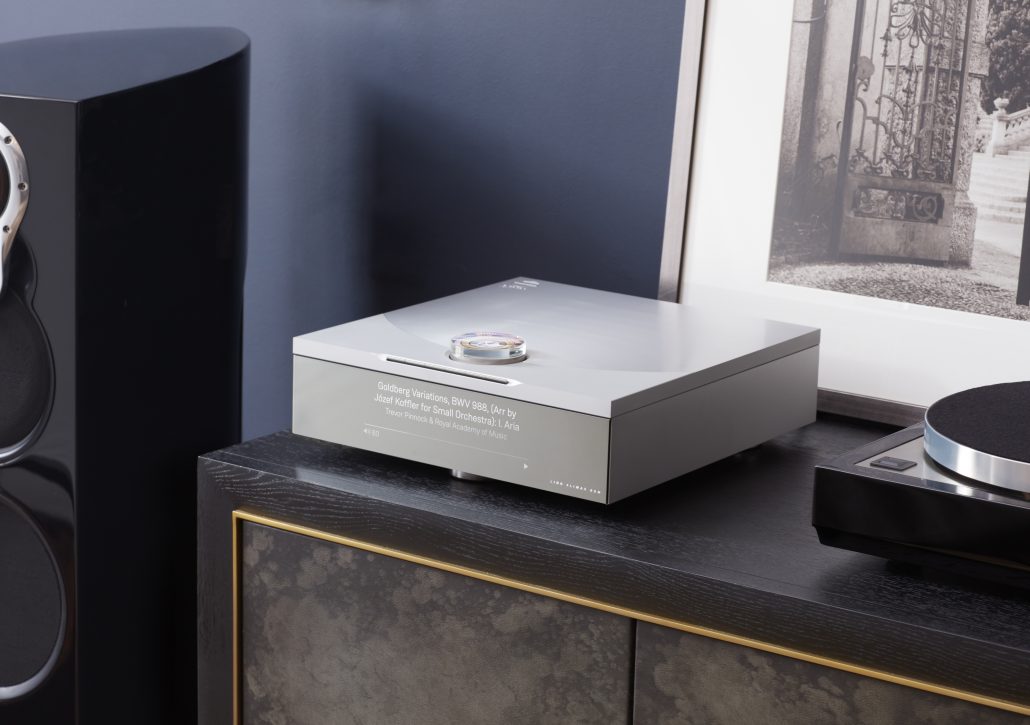
So now we have a new Klimax DSM/3 (2020 variant) which is in a brand new
enclosure, features a brand new Organik DAC and is twice the price of a
DSM/2. It'll be a replacement, right? Well, no, or at least not yet.
The existing DSM/2 will continue in the range with its onboard Katalyst
DAC. As will the Klimax System Hub which is the Exakt only version that
has no DAC - of which there is also a next generation version,
presumably named Klimax System Hub/1. Even more confusing, the older
Klimax DSM/2 will later be upgradable from Katalyst to Organik DAC.
Goodness knows what they'll call that version! Its almost as if its all
designed to be confusing so that you feel the need to go to a dealer
just to figure out what's going on - if they're not scratching their
heads too of course!
In physical terms, here's the old one (black and silver options):
and here's the new one (black and silver options):
Looks
are very much a personal thing, of course. For me, the pictures make
the new DSM look a bit, well, clunky next to the original which is slim
and elegant. The review sample was silver, which, when looked at from
the top is well finished and attractive with is machined in "record
grooves" and classy but understated Linn logo to the left rear, also
machined into the panel. From the side though, the way the silver top
plate overlaps the black display glass is a little jarring. I expect
this will not be an issue with the black version. The 3 feet (the front
one aligned centrally, echoing the dial) are well finished with a
polished look - high quality but a little blingy for my taste. The front
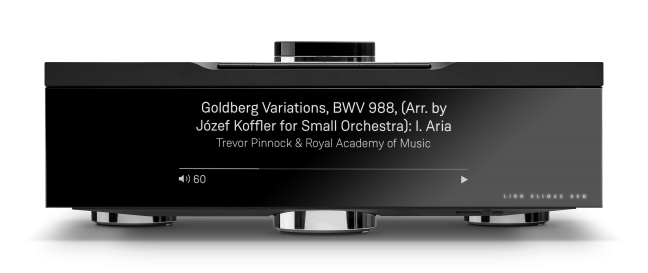
full width panel acts pretty much as a mirror when the display is
dormant. When the display is in use the font is extremely clear,
simple, attractive and understated but its pretty obvious that the
display is not full width which spoils the effect a little. There is a
"LINN KLIMAX DSM" illuminated logo at the bottom right of the front
panel which is much nicer that the old Linn ultra bright blue LED. The
display goes to sleep after a few seconds of no changes but comes back
to life when you approach the device (optionally - this can be switched
off) or when the track changes or an instruction to do something is sent
to the device or input by the dial.
Along the front are a
row of high quality feel switches which can be "pinned" with a user
defined function - perhaps go straight to a radio station, or a
streaming service playlist, or an album. Useful if the unit is being
used by members of the household who aren't into the whole hifi stuff
for quick access to what they normally like to listen to. The remote is
the standard £55 Linn slimline unit - neat enough, but not in the same
league as the finish and luxury of the main unit.
Knob - where
do you stand on the knob, or "dial" as Linn prefer to refer to it? Its a
beautifully crafted thing - the action is smooth, the circle of LEDs
very responsive, the finish first class, the inscription full of
confidence. The vertical click action (for on/off) is not very positive
and has a tiny bit of "squish" - the rocking action (for next track,
for example) is quite a pronounced movement, much further than I was
expecting, but I guess that is to avoid accidentally actioning something
unwanted. For me, and I know this is a personal thing, the dial is
fabulous in a couple of ways - it is a fabulous bit of jewellery and a
fabulous waste of money. I would never use it as everything it does can
be done from the listening position - on your tablet, PC, phone.
Beautifully crafted jewellery. From my perspective, it adds nothing to the user experience and nothing to the way it sounds.
The
top plate is machined with curved grooves from about 1/3 of the way
from the front right to the back and this is enhanced by the deeply
machined "Linn" logo at the left rear corner. All very crisply
executed.
Groovy
Back
panel connectivity depends on if you select Music (no HDMI) or AV (with
HDMI) versions. Included are ethernet ports in both copper and (new to
Linn) optical connectors, USB, optical digital, analogue, coax digital
and Exaktlinks. Addition Linn is now supporting wifi and bluetooth
connectivity. As with other Linn streamers, management of the product
(setting preferences, amending room optimisation options etc.) are
available through the desktop Konfig application and your online Linn
account in a browser. I noted that Konfig does not allow the rear panel
LEDs to be turned off as they are in other streamers, but Beta versions
of the Davaar operating system suggest that this is on the way. It is
totally necessary otherwise the flashing network LEDs reflect
distractingly against the wall behind the device (post review update:
software has been updated to allow the LEDs to be switched off). I'm not clear on the precise details, but I understand some, or all, of the circuit boards inside the unit are on suspension systems and this was a major part of delivering the performance improvements.
Here are a few shots of unboxing the device:
Chunkier than the traditional Linn packaging
Pair of Linn "silver" interconnects, standard mains lead, standard Linn slimline remote
The unit is enveloped in a folded thick soft plastic wrap which curiously leaves the dial uncovered - I understand that there is a separate piece of vinyl for the dial which has gone missing on the review sample - this unit has already been out for demos in several homes
Peeling back the wrap
Unboxed
The
KDSM/3, as with all Linn streamers, supports the Glaswegian approach to
room optimisation called SPACE. I won't go into the details here, you
can learn more at Linn: SPACE Explained
As
with the original generation of Klimax product, this new version is
machined from solid alloy billets in Linn's in-house machining
department. Here's a video featuring the previous generation Klimax DSM where you can see the complexity of the internal machining:
Then there's the whole Selekt comparison - they're visually,
superficially, very similar but sit in very different price brackets
indeed. Clearly Linn like this form factor, but is the Selekt too
similar and might it therefore subconciously eat into the Klimax's kudos?
Price run-down:
Klimax
DSM/3 Music - £30,000; onboard stereo Organik DAC, aimed at being a
source / pre-amp in a traditional system. Can be used as a source /
pre-amp in an Exakt system, but that's not very cost efficient.
Klimax
DSM/3 AV - £30,000; onboard stereo Organik DAC but also HDMI inputs to
enable connection to video related sources. Can be used as a source /
processor in an Exakt system when equipped with the optional £1200
surround processor module. Can be used as a source / pre-amp in an Exakt
system, but that's not very cost efficient.
Klimax System Hub/1 -
£15,000; no onboard DAC, can only be used as a source / pre-amp in a
full Exakt system (Linn Exakt active speakers or more interestingly with
Exaktboxes and power amps to feed a wider range of speakers). Has HDMI
inputs and can be used with the optional surround processor module
(£1200) for DTS / DD high definition surround goodness.
The unit
on review as the AV version and has been used for several tens of hours
already - I didn't notice any "burn in" nor "warm up" when listening -
but then again all listening was done after at least 20 minutes of
playing as that's necessary for the Lejonklou amps to come fully on
song.
Highly reflective front panel
AV Version Rear Panel - inputs on the lower half and top left, outputs top right
Once connected to the network, just like any other Linn streamer, the new box appears in Konfig for set up purposes:
At the time of the review the product was about 2 weeks old. There was already a software update available to install.
NEXT GENERATION KLIMAX DSM AS A SYSTEM HUB IN AN EXAKT ACTIVE SYSTEM
Snappy
subtitle there. There are 2 ways you can use a new fully featured
Klimax DSM/3 - either with its internal stereo Organik DAC as a source
into a traditional pre-amp / power amp / passive speaker system, or you
can use the Exaktlink output and connect it to a pair of Linn Exakt
active speakers or to one or more Linn Exaktboxes and power amps into
speakers that are ready to accept an active signal per individual drive
unit. It is this second context that we explore here as that's how it
easily sits into my regular system. If used in this way then it would
be better to go with the DACless Klimax System Hub/1 which halves the
purchase price. Of course, its necessary to have the Linn Exaktbox DACs
or a set of Linn Exakt speakers with their integrated DACs and power
amps, so that money is spent elsewhere, albeit with more choice of price
points.
More information on Linn's Exakt technology can be found here: https://www.linn.co.uk/uk/technology/exakt
If you look at that page you'll see that Linn claims Exakt transfers
digital data to the DAC and on to the speakers flawlessly. So why would
anyone purchase a Klimax System Hub at £15k when "exaktly" the same
digital information can be delivered by a new Akurate System Hub at
£2700 or even a used Majik DSM at £1500? A very valid question.
So, finally, on to some listening. The system used for this demo:
PS Audio PowerPlant 5 power regenerator powering DSM, Exaktbox and Melco.
Melco N1ZH "NAS"
Linn Akurate Exaktbox 6/1 (with Katalyst DACs)
3x Lejonklou Tundra Stereo 2.5 power amps
PMC Twenty.26 speakers converted for active use, Gaia III feet
PMC Twenty.26 Exakt Filters Production v2.2 by Speakerfilters.com
Quadraspire Evo racks, Cyrus Isoplat isolation platforms
Cables by Chord, Meicord, Linn, Naim, Puritan
Comparisons between the AEDSM and KDSM/3 were achieved by moving the cables to the
Melco and the Exaktbox between the 2 units, hence minimising changes.
Both were powered from the PS Audio using Puritan mains cables. As the
KDSM/3 on demo was not fitted with the optional surround module, all the
listening was to stereo music.
SPACE Optimisation was the same for both devices - my regular settings were used.
Here's
the silver demo unit sitting alongside my Akurate Exakt DSM (now named
Akurate System Hub, but functionally identical to each other):
A
streamer - it just takes 1s and 0s from a storage drive (local, or in
the cloud) across a network, reads some metadata for control /
information purposes, and passes the 1s and 0s unmolested along to the
DAC which turns them into analogue waveforms that we can listen to,
after amplification.
Right? So as long as the streamer is
competent, there will be no difference in the 1s and 0s that get to the
DAC and its all about the DAC. Right?
In my Exakt system the
Klimax DSM is doing precisely the same job as the Akurate Exakt DSM that
is the main source / pre-amp in use every single day. With the system
being Exakt, the DAC is at the end of another piece of Cat 5/6/7 cable
in the Exaktbox which does the Exakt phase correction, separation of
frequencies for each speaker drive unit and applies time correction,
room optimisation and volume levels. So, in this demo the Klimax DSM/3
is only acting as though it were a Klimax System Hub/1 which would be a
much more cost effective approach in this system.
Start up sequence:
EXAKT LISTENING
Below
I list the tracks used for testing. My notes are not "absolutes" about
the tracks, what I've tried to capture is what KDSM/3 does over and
above AEDSM and these are highlights from tonight's session:
Agnes
Obel - Aventine - The Curse - 16/44.1: Strings that "breath" as they
are bowed. Pizzicato that twangs with a convincing staccato pluck.
Coherence across all the strings as they form the flowing build up with
the piano remaining crisply contrasting with its clipping percussive
feel. You get a much better sense of not only what is being plucked /
bowed, not only how it is being plucked / bowed, but much more about why
its being played the way it is being played.
Rufus du Sol -
Live From Joshua Tree - Eyes - 24/44.1: A track that drives along at a
pace but that pace is far more "driven" and precise with a much wider
image filling the room better. There's a bridge at about 2:50 that I've
never really thought fitted in with the song but now it seems to make
far more musical sense as the song "rests" from the driving beat -
giving a breather along the way.
Rufus du Sol - Live From
Joshua Tree - Underwater - 24/44.1: From about 50 seconds in this track
has a deep bass / percussive underpinning which is a little loose and
bloated on the AEDSM but now it i taught, balanced in the mix with the
notes having incredibly complex texture. I close my eyes and get a
little lost in the way the music is structured, layered - complex but
fully coherent. 4 minutes in and there's a tense build up using entirely
synthesised sounds that works on a more emotional level than usual. Its
impossible to ignore the music's message.
Christine and the
Queens - Chris - 5 Dollars - 16/44.1: A track I really like musically
but it can get a bit strident in the chorus, and to an extent its still
there in way, but is better tamed here. Other than that and a little
more stability in the imaging, I didn't get a great deal more out of
this than I do with the usual streamer.
Renegade Creation - Bullet
- Bullet - 16/44.1: Blues rock from Robben Ford and friends, not a bad
recording but not the best - perhaps a more rough and ready feel is part
of the intended approach. Again that timing thing - there is a sense of
urgency here that works perfectly on this track, plus the vocals are
easier to follow as the cacophony of instruments are both controlled,
aggressive but not overwhelming the singer. Somehow the track seems
about 30 seconds shorter than usual!
Eddi Reader - Mirmama -
Hello In There - 16/44.1: A very emotional piece and one that didn't
become any more emotional here. There was a little more definition in
the the breathiness of Reader's vocals and perhaps a little more insight
into the technique of the percussionist.
Sun Kil Moon - Admiral
Fell Promises - Half Moon Bay 24/44.1: In typical downbeat mood, SKM
uses short stringed instruments (mandolin?) to illustrate melancholy
with short piercing minor chord changes that give a feeling of extra
pains experienced from time to time. Here those minor chords carry just a
little more heartache and as the track reaches its conclusion I'm under
the impression that life continues regardless, may be even despite of
the singer's grief. The instrumental finish is beautifully resolved and
emotional. Blimey.
Calexico - Carried To Dust - Man Made Lake -
16/44.1 - opens with a delicate bell-like sound that floats effortlessly
mid air and then is punctuated by a bass drum of solidity in stunning
contrast. You pay attention. The carefully picked guitar has a hard
twang that's better defined, the distorted screaming guitar is better
resolved but not painful to listen to (to be fair, its not painful on
the AEDSM either, its just a little less screamy) and the lyrics float
over the top but bring it all together as something that gels better on
the KDSM.
Oh, I've been listening for 3 hours. Where did that go? Off to bed and more appraisal tomorrow.
Submotion
Orchestra - Fragments - Thinking (Mark Knight Remix) - 24/44.1: Opening
with some lightweight faux percussion, this track doesn't bode well.
But then the bass percussion punches in and the track gets going - the
KDSM/3 really kicks this out, super tight, really driving and a bit
addictive. At 1 minute there's a break and the bass riff gets going. The
electronic instruments are just bleeps and blops, right? Well no, not
with this source - its difficult to get across just how much more nuance
is in these notes, and there's that differentiation between notes but
with a timing precision that's better again. Some of the background
intertwined vocals, electronic swooshes etc. are more prominent here,
yet they add to the feel of the track, they don't shout "look at me",
then add to the mix. Its quite the trick.
Joan Armatrading - Love
And Affection - 16/44.1- the opening sequence has a very gentle set of
chords that introduce us to the feel. Now the strings are struck with
more care, with more thoughtful intervals, the background splashes feel
more like a part of the feel rather than mere jewellery. The background
male vocals have more of a raspy edge. Unfortunately for my family I
feel I just want to "sing it, sing it, sing it".
St. Germain - St.
Germain - Mary L. - 24/44.1: complex multi-layered jazztronica
sophistication. Who knew there was even more complex multi-layered stuff
going on here. Plus, that underlying bass rumble is now not just bass,
but a little threatening and tying the whole thing together much more
coherently. You know when you watch an artist start a painting of a
lanscape with a pink base, then adds multiple coloured layers that are
nothing to do with what you see as a moor of heather, then, with the
last layer or 2 and a few brush strokes it comes together to give you
the feel, the atmosphere of the scene? Well, that, but with music.
Rush
- Moving Pictures - Red Barchetta - 24/96: chosen as this is one of my
favourite tracks but is pretty poor in terms of production values. I
listen to it now and then, but the poor quality is always a bit of a
distraction. Well. Its very good this streamer, but its not a worker of
miracles, after all. That thinness and feeling of compression is right
there, unfortunately. On the plus side that ability to really drive the
tune without aggression is displayed well.
An observation -
the Linn Akurate Katalyst DAC is quite capable of revealling what this
streamer is doing to the musical message, which is very good sign in
terms of its capabilities. There's lots of talk / hope of a version of
the Organik DAC coming to the Akurate range, but I'd add that it would
be great to get something of what this streaming platform is doing as an
update to the Akurate Exakt DSM / System Hub please.
I think the imaging stability of my system is one of the best I've heard
anywhere but the Klimax DSM/3 takes it to a level I've never heard
anywhere on any system at any price. Its one of the most uncanny aspects
of this source - what is it doing to the digital bits that its sends to
the DAC that makes this happen? What's wrong with systems that don't
do this?
Summarising all the above is to say that this is
another step closer to the musical experience - yes, there's lots of
"hifi" improvements but they do not distract. And that's really
important - too often at shows a system sounds amazingly detailed, or
startlingly clear, or really dynamic but within a few minutes of trying
to figure out what's going on with the artists' messages to the listener
it becomes apparent that you either don't have a clue, its taking too
much effort or you just can't be bothered. There's something not
getting through, or there's so many individual bits coming through at
their own pace or volume or time that they don't join up at all. I'm
finding the dynamics of the tunes enjoyable at 4 or 5 volume clicks
lower than usual - more dynamic but more relaxed at the same time? And
that's the trick that the KDSM/3 (used as a KSH/1) pulls off - it does
oodles of detail, masses of information, but the information is not
tripping over itsself. Its not getting in the way of the message, its a
solid and coherent part of the message. There's so little processing for
the brain to do - the emotion is being provided for you, you don't have
to go looking for it. Given that this is "just" a streamer, that's a
remarkable achievement and really clarifies that the streamer is
important, that source first is still the right approach.
NEXT GENERATION KLIMAX DSM AS STREAMER, ORGANIK DAC AND PRE-AMP IN A MORE TRADITIONAL SYSTEM
By
more traditional I mean no Exakt, and no active amplification. So
source - pre-amp - power amp - passive speakers. I thought for quite
some time about how to do this, and what would the comparison be with.
Certainly I needed to convert my PMC Twenty.26 speakers back to passive,
but then I don't have a streamer that's capable of outputting an
anlogue signal. I resolved it using a feature Linn added about 18
months ago to their Exaktbox - if you're not interested in this detail,
skip the next paragraph.
How to run passive speakers in a system
with a Linn Exakt streamer and a Linn Exaktbox DAC / DSP that is
designed to operate with multiple amplifers (one for each speaker drive
unit) and active ready speakers? Well about 18 months ago (maybe a
little longer?) Linn added the option to run a surround module inside
the Exakt DSM. But along with that they added a lot more options to the
Exaktbox configurations so that an Exaktbox could be used as a
multi-channel full range DAC. So rather than using an Exaktbox to DAC
per drive unit, it was possible for it to DAC per complete passive
speaker. So that's the route I went down for this comparison.
PMCs after conversion back to passive
Using long Linn Silver interconnects to reach the power amp for passive use
Organik passive listening. The table is faulty - no beer!
I
don't have a previous generation Klimax Exakt DSM/2 to hand for
comparison. But I do have Akurate level Katalyst DACs in my Exaktboxes -
so here the comparison is with Linn's previous generation DAC, albeit
from one down in the hierarchy.
Linn has been in the digital
business since they launched a CD player (reluctantly, and late to the
game) in the 1990s. Since then we've seen a number of DAC iterations in
Linn products, culminating in their "Katalyst" architecture in Klimax
and Akurate products about 2.5 years ago. This uses an "off the shelf"
AKM DAC chip built in a Linn designed multi independent power supply
setting along with Linn's usual FPGA based pre-DAC processing and
upsampling etc. Now, with Klimax DSM/3, Linn has moved to an in-house
design from scratch DAC. For Linn its a major change and places them in a
similar place to other high end DAC designs from the likes of Chord and
dCS. So the previous Katalyst DAC was a major uplift in the musical
ability of the Linn streamers - now they claim, with their in-house
Organik design to have taken it a step or two further. You can learn a
little about it at the link, along with a nice marketing video. Suffice
to say, Linn are claiming much greater control over the whole digital
to analogue conversion with the ability to prioritise what they believe
is important in getting the music to the listener: https://www.linn.co.uk/uk/technology/organik
The system used for this demo:
PS Audio PowerPlant 5 power regenerator powering DSM, Exaktbox and Melco.
Melco N1ZH "NAS"
Linn Akurate Exaktbox 6/1 (with Katalyst DACs) - used as a 2 channel DAC in pass through mode
Lejonklou Tundra Stereo 2.5 power amp
PMC Twenty.26 speakers running in standard passive configuration, Gaia III feet
Quadraspire Evo racks, Cyrus Isoplat isolation platforms
Cables by Chord, Meicord, Linn, Naim, Puritan
Comparison
between the Akurate Exakt DSM, Akurate Katalyst DACs (not working as
Exakt, but in pass through full range mode) and KDSM/3 working as a standard analogue output source with the Organik DAC. This was achieved by switching the analogue output cables from each of the units at the back of the power amp, hence minimising changes (although the
KDSM/3 location necessitated a longer interconnect, but both were Linn
silver). Both were powered from the PS Audio
using Puritan mains cables. All the listening was to stereo music.
SPACE Optimisation was the same for both devices - my regular settings were used.
Mark
Knopfler - Privateering - Privateering - 24/96 Qobuz: I'm not really a
fan of Knopfler's post Straits work - it feels too much like American
country and western which is not a genre of music I choose to purchase.
Americana yes, C&W, no. I'm listening to this track as part of a
regular on line music introducing session run out of the Linn
Enthusiasts Facebook page. Normally I would get about 30 seconds to 1
minute into a song like this and dismiss it. But these sessions are
about recommended music to try, so I listen to all the tracks all the
way through. And with Privateering this turns out to be a good thing as
it develops into something more rounded and complex compared to my
expectations. I get involved in the song. Is this just because I've
forced myself to be more patient, or is it part of the KDSM/3
experience? Either way, I enjoy this song - a first really. I can't
give you specific comparison comments, but that bigger picture of
enjoying a song I didn't expect to - perhaps that's enough to be getting
on with.
Rush - Moving Pictures - Red Barchetta - 24/96: as
earlier, the next gen Klimax is not a miracle worker, yet there is
another improvement in understanding the song and the intent - possibly
from the timing, possibly from better resolution but the urgency of the
chase here is just that bit more, err, urgent.
Roisin Murphy -
Crooked Machine - Capable Rhythm - Qobuz 16/44.1: this track has a very
solid, driving bass line and percussion, played off against an insistent
strumming electric guitar and interspersed short sharp chord changes.
That "very solid", with Organik becomes 3 dimensional, tangible bringing
the track into the room almost as if the bass is being carved into the
air. At the end the backing track fades and the guitar strumming is
crisp, sharp, intense compared to a more subdued feel with Katalyst. It
puts you on edge, eager to hear what Murphy is going to conjure up
next. And that's the point isn't it? Wanting more music.
Christine
and the Queens - Chris - 5 Dollars - 16/44.1: As mentioned above, a
track I really
like musically but it can get a bit strident in the chorus, and to an
extent it was better tamed with KDSM/2 as a system hub, but here its
pretty much eliminated. Using the Organik DAC adds to the sense of pace
in this track, further driving foot tapping and appreciation of the
energy involved - it remined me of the first time seeing "Tilted" being
performed on Jools Holland and marvelling all elements of the artistry
involved - words, music and dance.
As a complete source -
streamer, DAC and pre-amp, there's no doubt from this experience that
its a huge uplift from Akurate level Katalyst and - from memory - from
KDSM/2 too. This is the first Linn source I've heard that makes a
passive Klimax level source sound better than an Akurate Exakt Katalyst
source - and its not by a small margin. Can't wait to hear Organik in an
Exakt system!
SUMMARY
Do I want one?
Close my eyes and ignore the bank balance and the answer is an
unequivocal "yes", no doubts. Would I get more emotional connection to
my music choices? Yes. Would I spend even longer browsing through new
music on Qobuz to see what grabs the attention? Yes. Would I only leave
the music room for food and beer? Possibly :) Open my eyes and it would
have to be the black version. Open my bank account and it would be
screaming at me with red ink. Do I need one? Not quite, but only because life's other priorities mean its just not realistic.
Is
it value for money? In absolute terms, no, but nothing is at this
level. The law of diminishing returns kicked in at many thousands of
pounds further down the ladder. Is is value for money against the way a
brand new BMW M4 depreciates? Yes, totally. But then again, that 5 year
old M4 will depreciate much more gently now...
If you enjoy your
music and can indulge yourself in luxuries at this investment level, by
all means go and have a listen, the chances are very high that you'll
place the order, probably you'll have decided within 5 tracks. If you
can possibly save hard and get there, go for a listen - you'll need to
make your own vfm judgement of course, but don't be surprised if you
start working out what there is in your house that could be moved on to
make the KDSM/3 happen for you, within the first 5 tracks.
If you
like the pace, rhythm and timing of a Naim system (downside: aggressive,
sometimes harsh), but the refinement and sophistication of a Linn
system (downside: too polite?), then finally you can have both without
any of those downsides. But more and better than both combined together.
If
you browse the blog from time to time, you'll know the number of
systems, shows and homes that have been visited to bring the content to
the readers. And you'll know that there are some seriously high priced
systems that get short shrift for their lack of musicality. It would be
easy to dismiss the KDSM/3 as a pointless luxury, a way to generate
profit. But don't, it would be a mistake to miss out on what would seem
to be a landmark product in the streaming world. I'm going to plagiarize
and slightly amend a phrase from a friend: the songs don't serve the
KDSM, the KDSM serves the songs. Unequivocally.
Enjoy a demo at your peril!
Thanks
to Simon and Marcus at Grammo for persuading me to have a listen,
bringing the unit over to allow this in very familiar surroundings and
leaving it for a good few days to try out the different combinations and
to get some time to get to grips with what's going on.